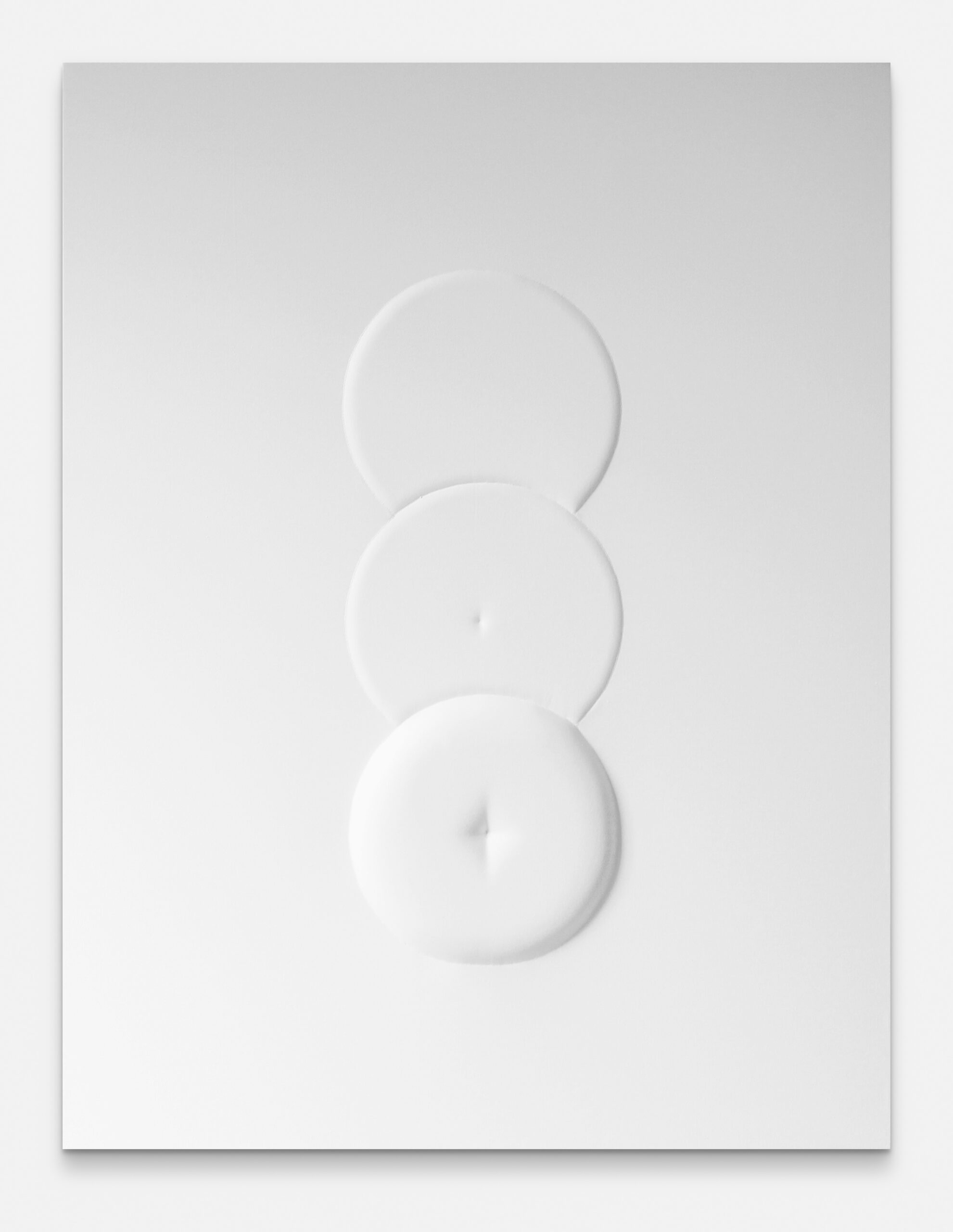
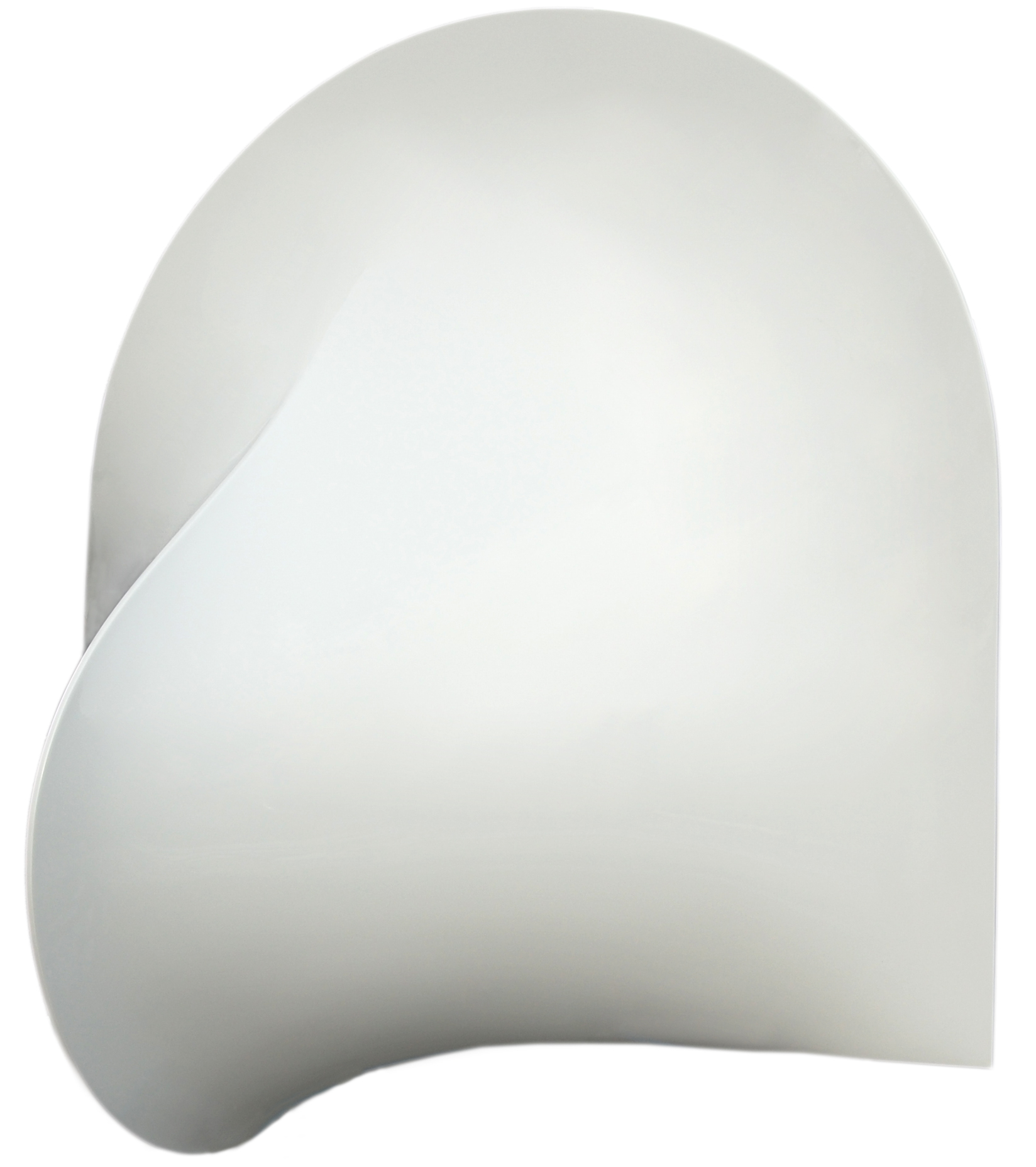
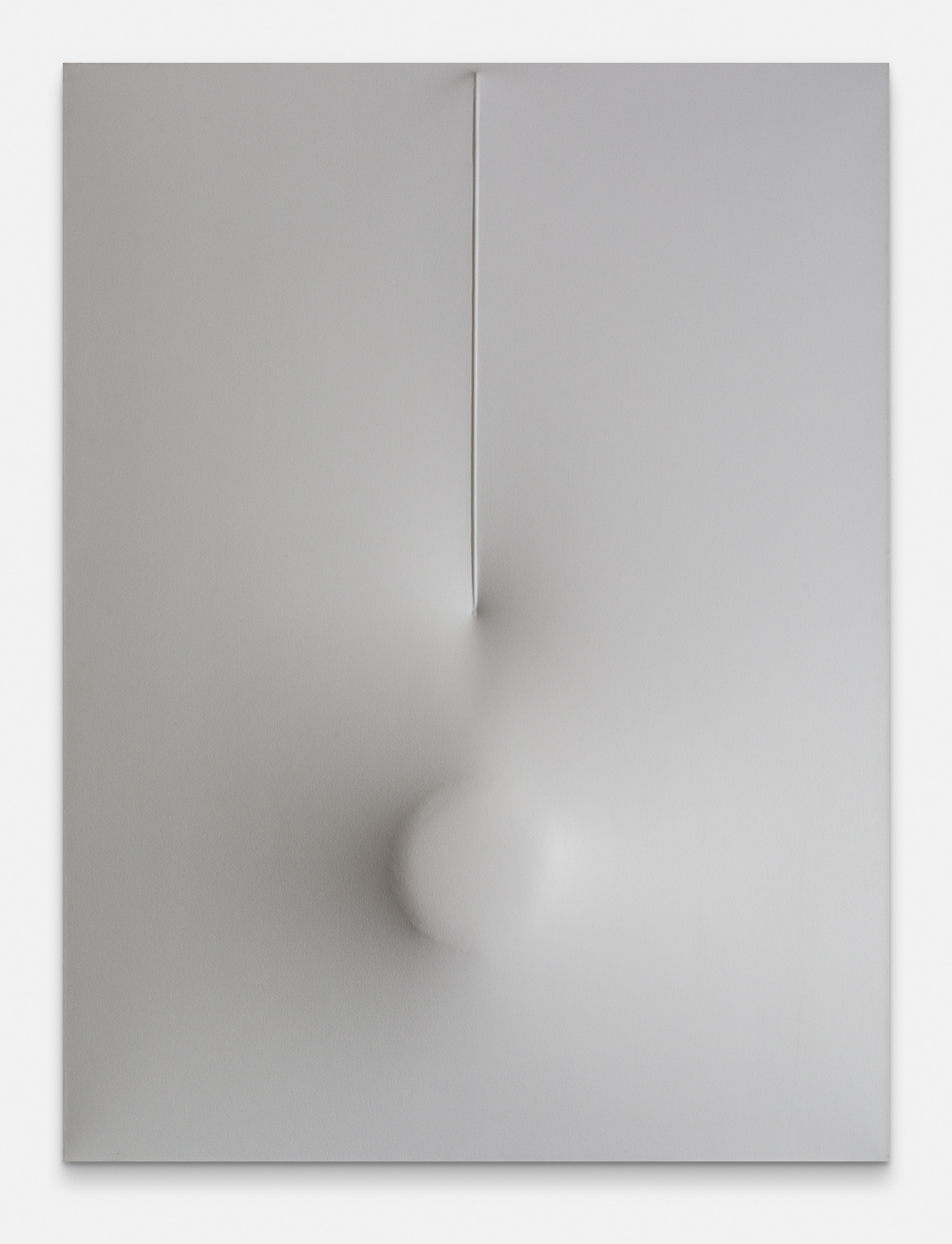
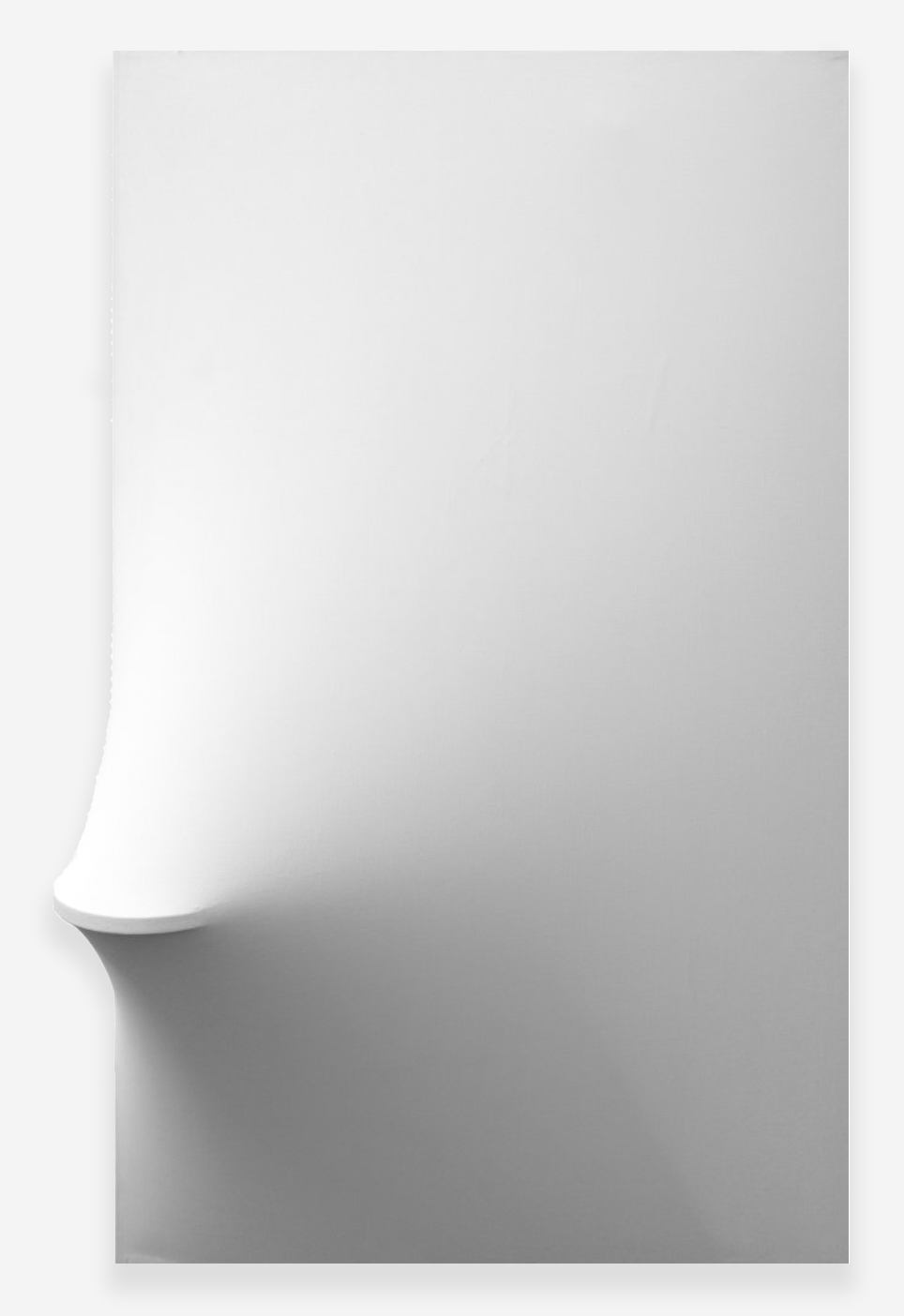
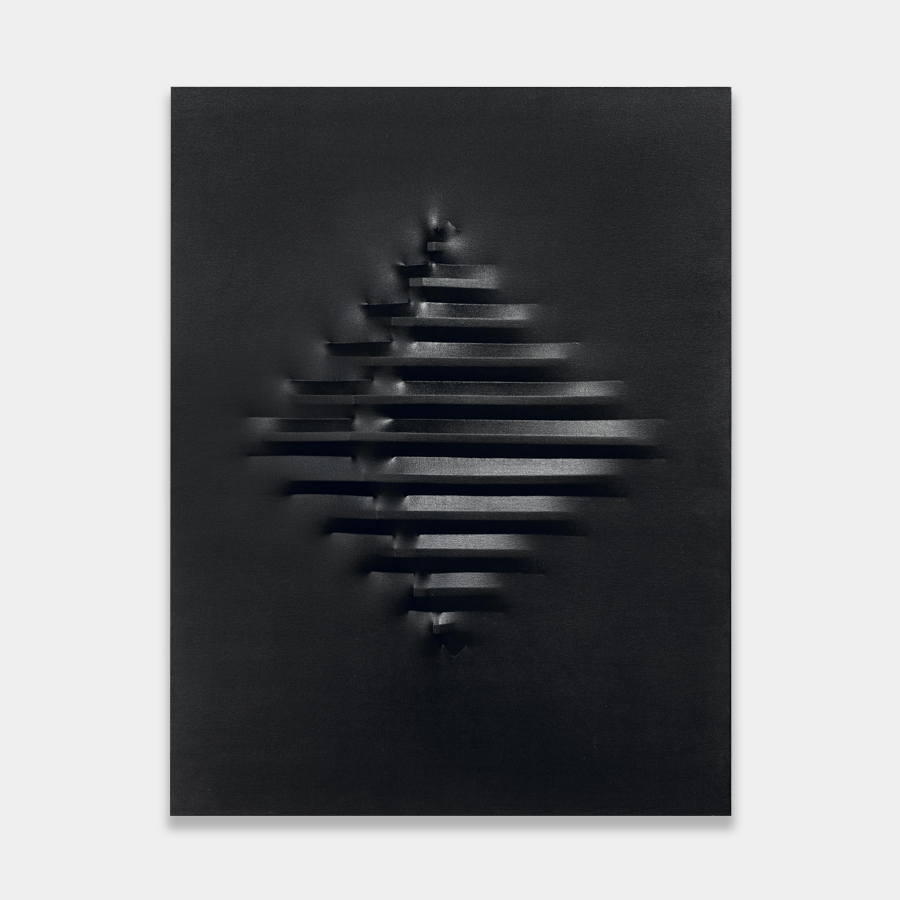
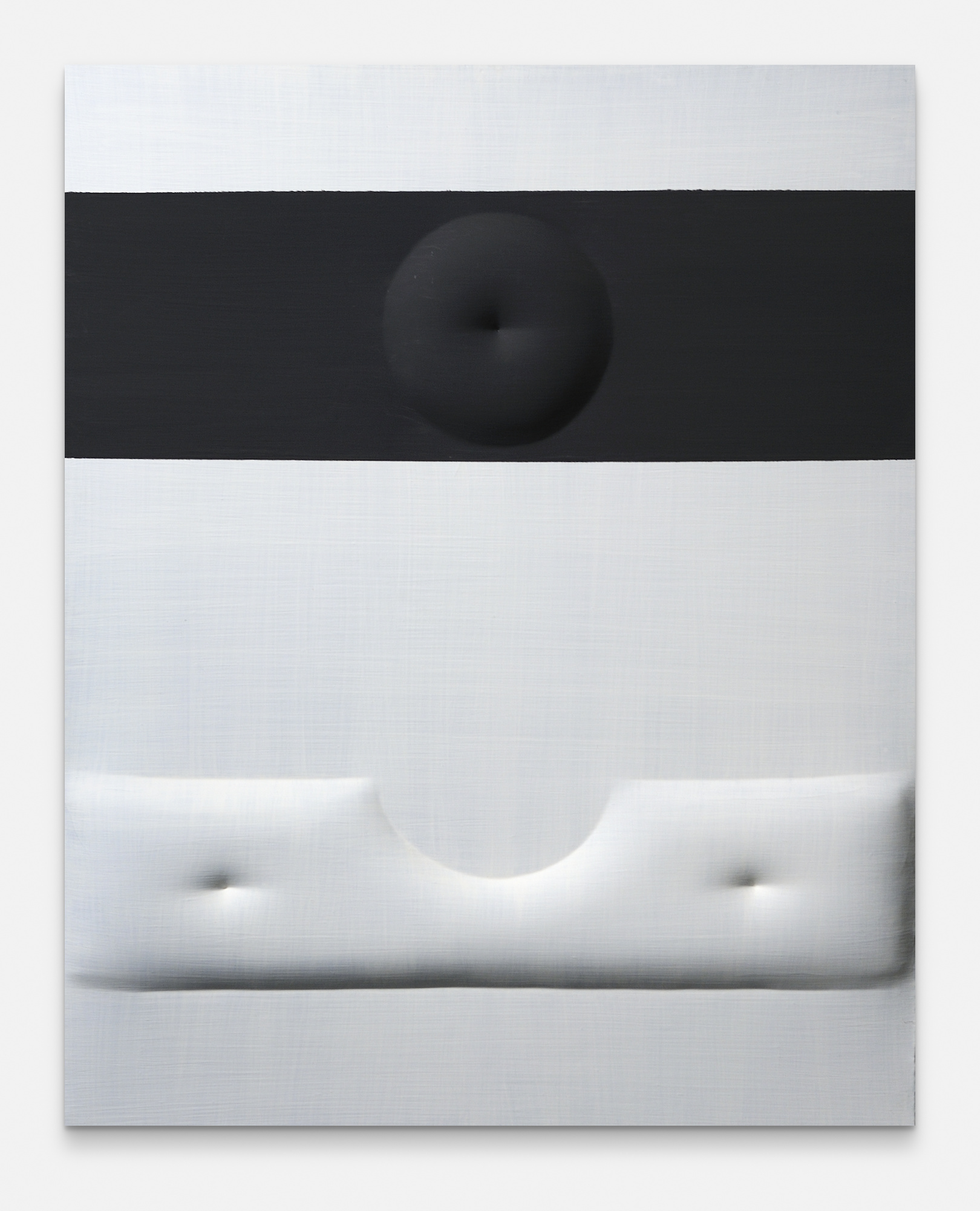
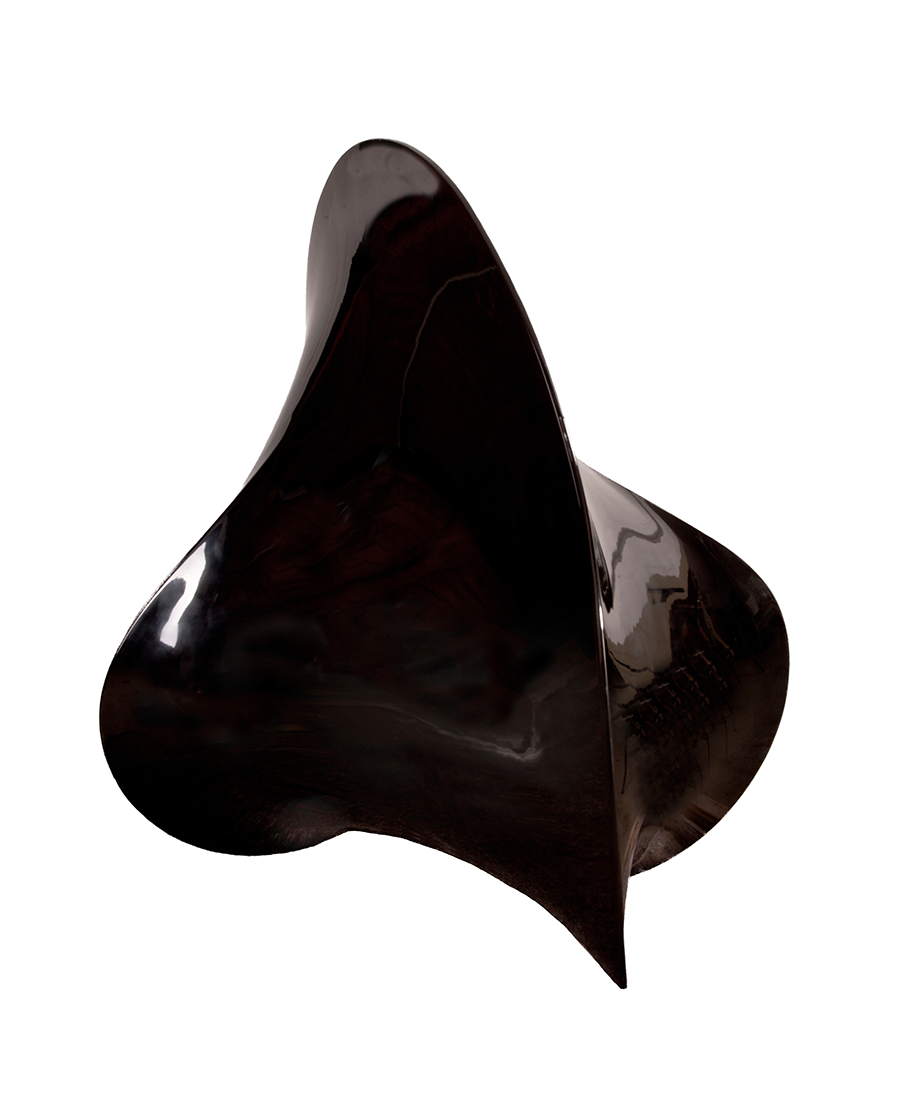
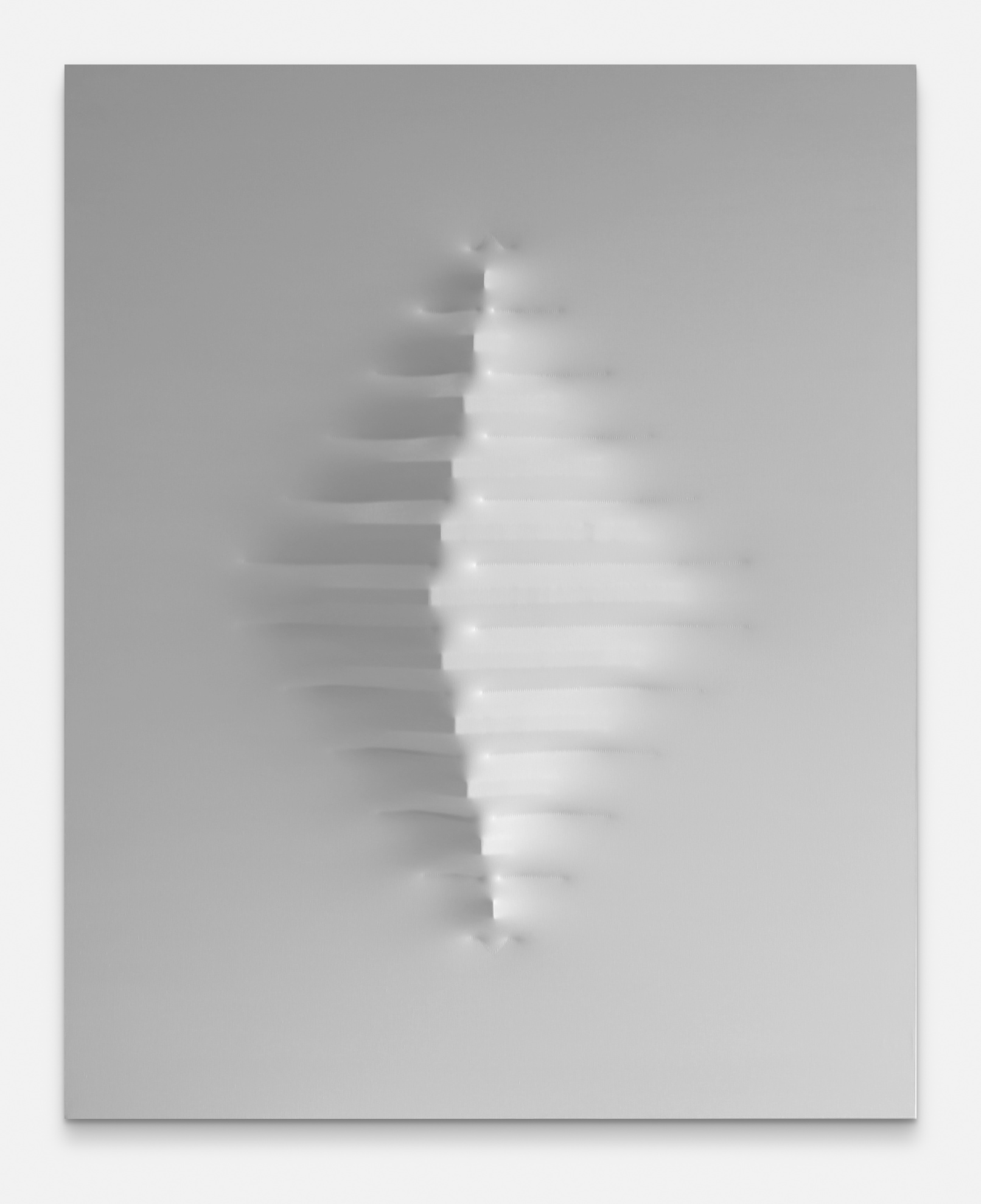
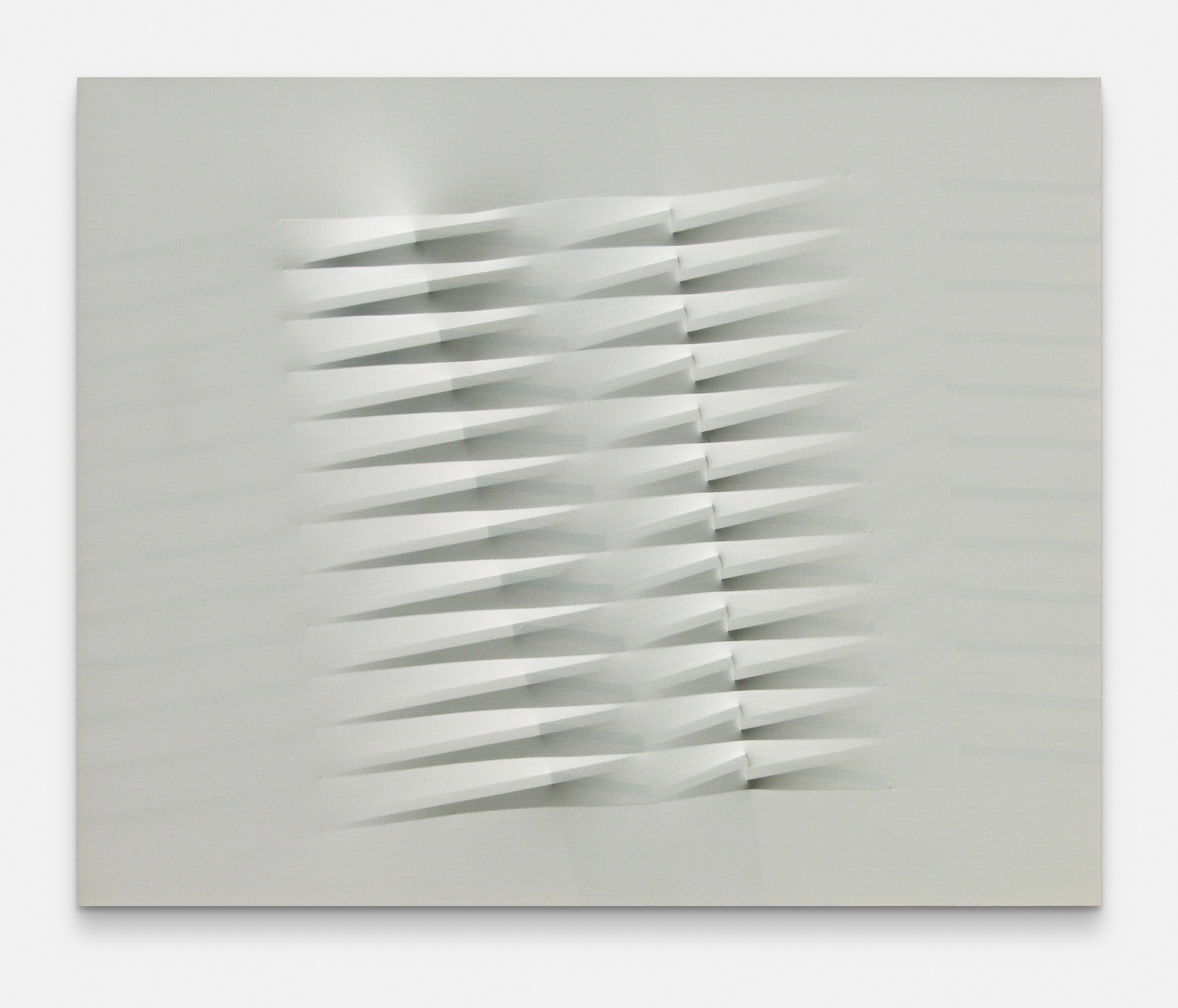
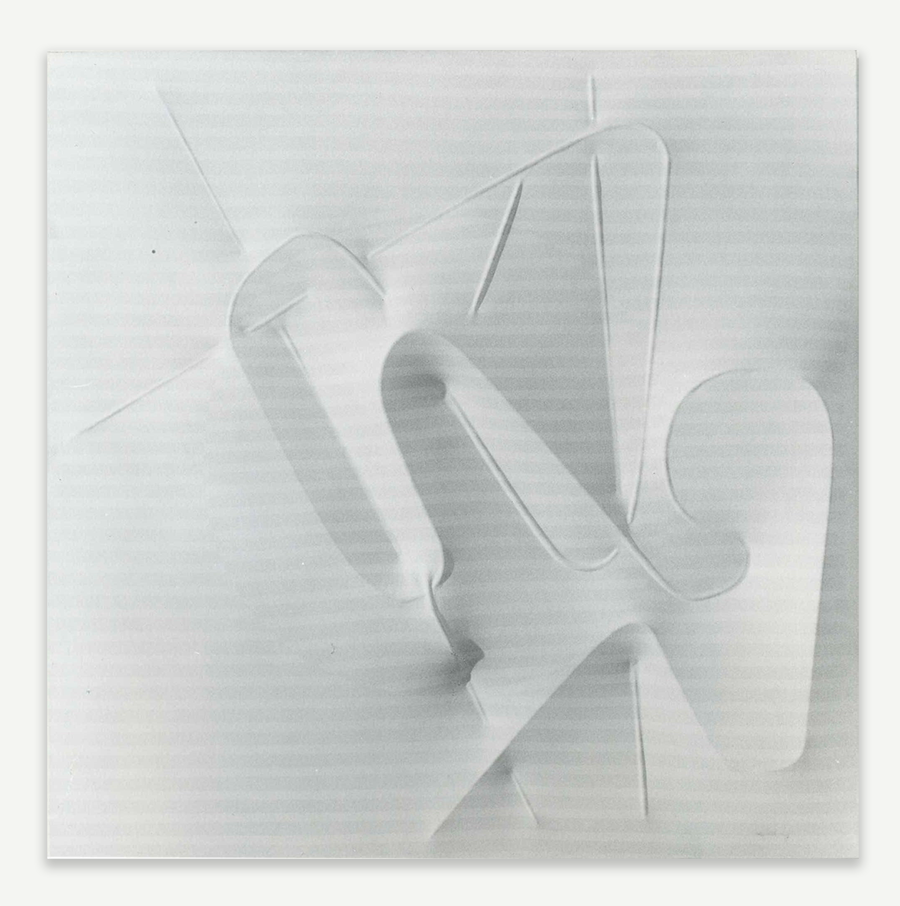
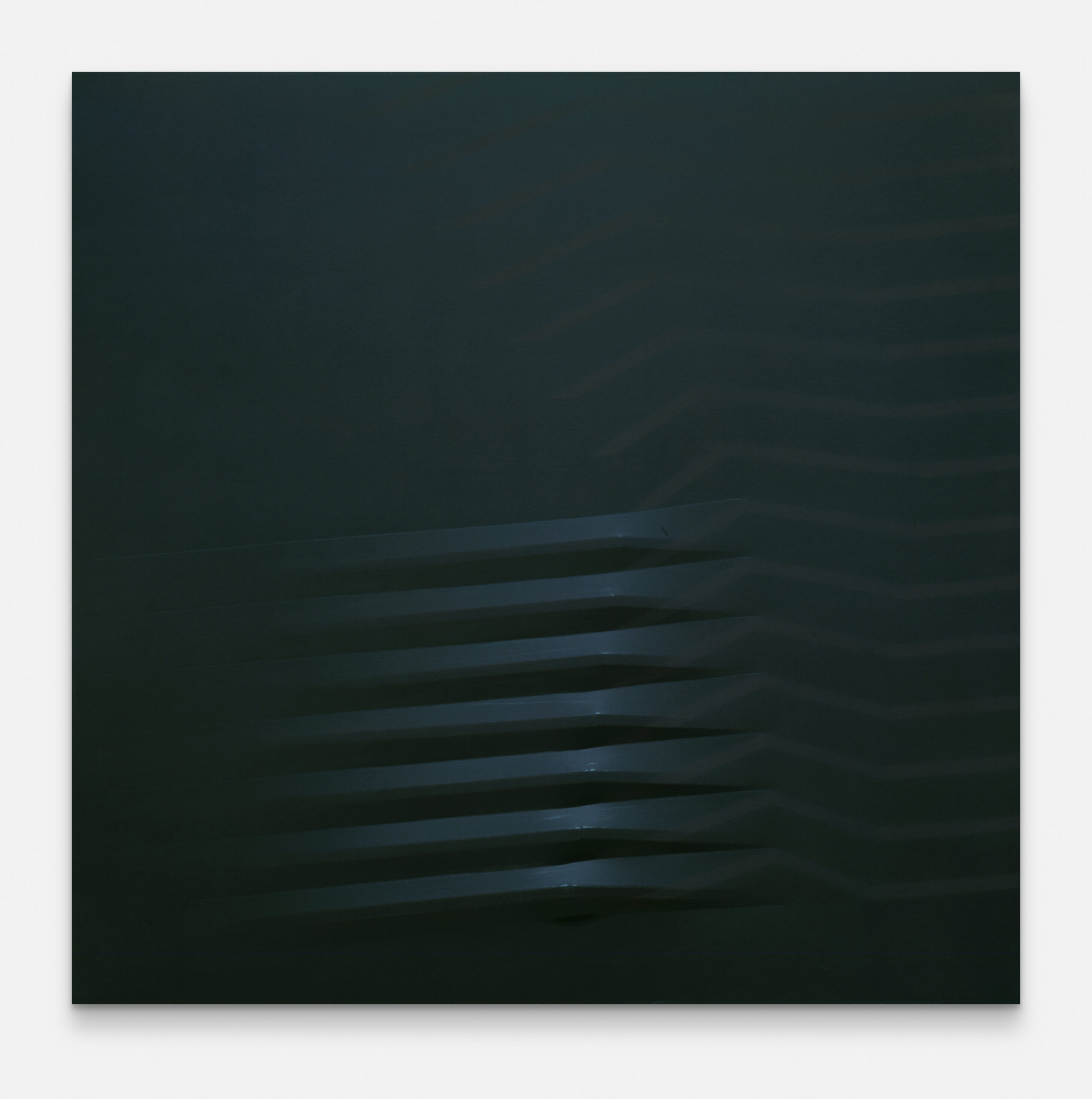
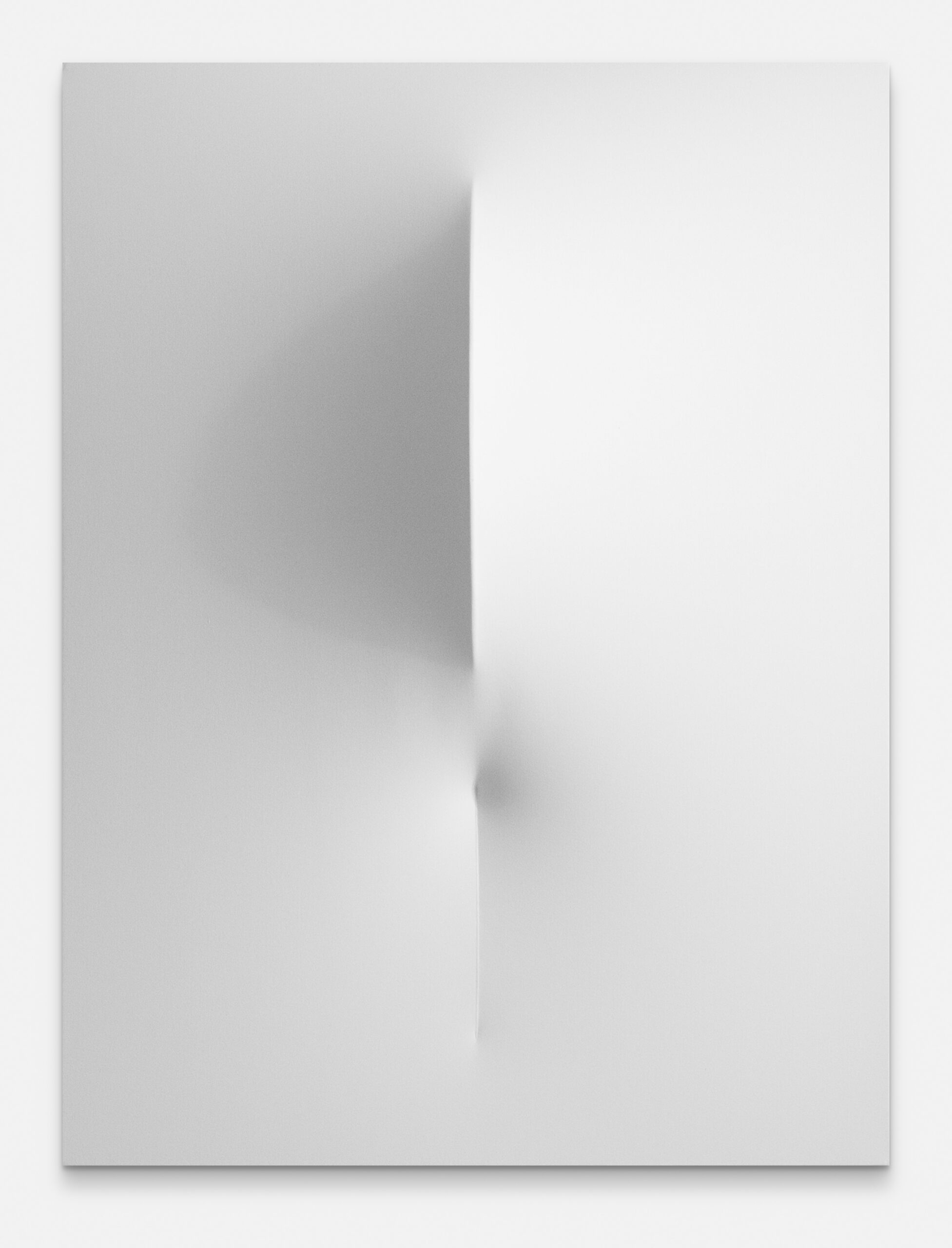
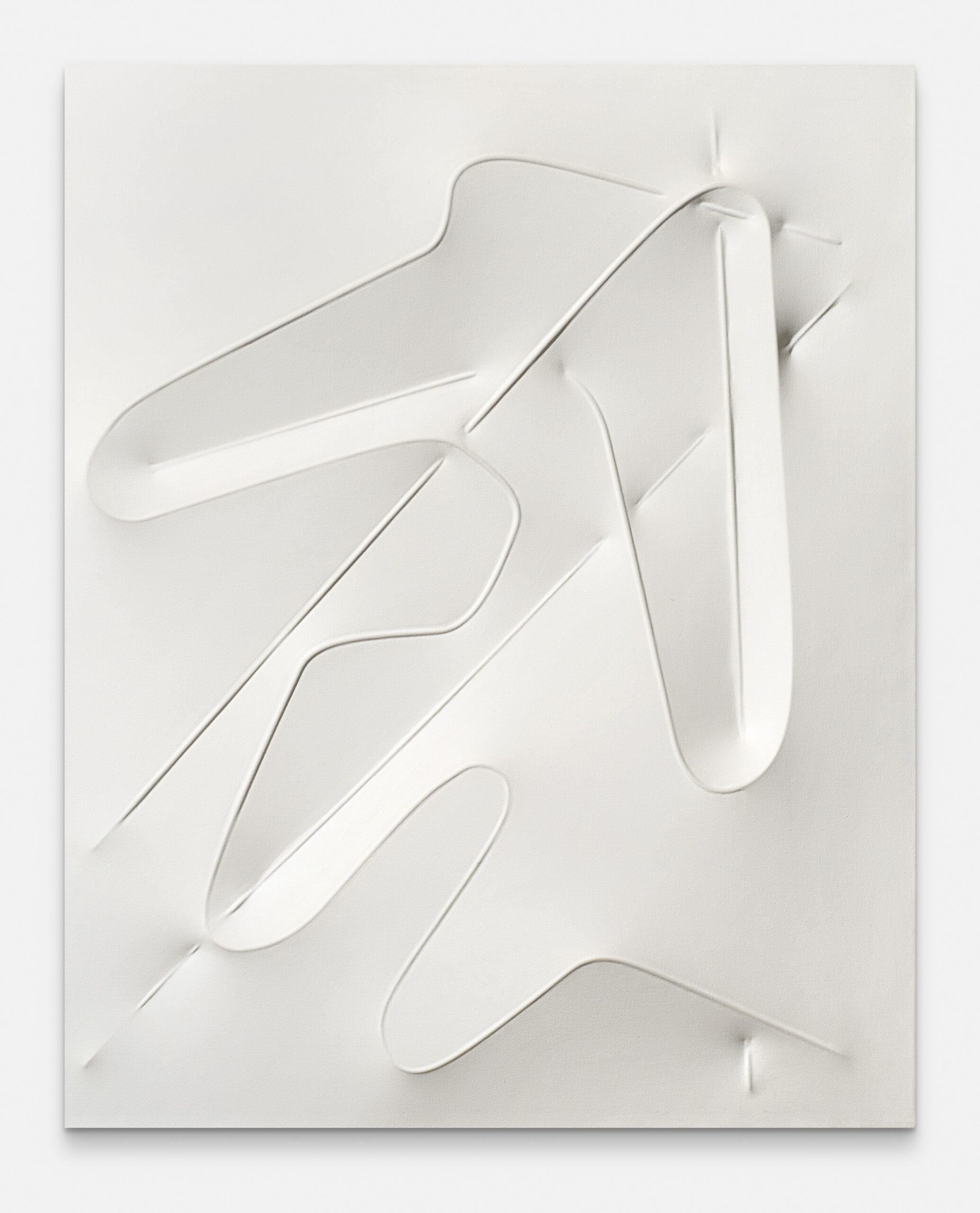
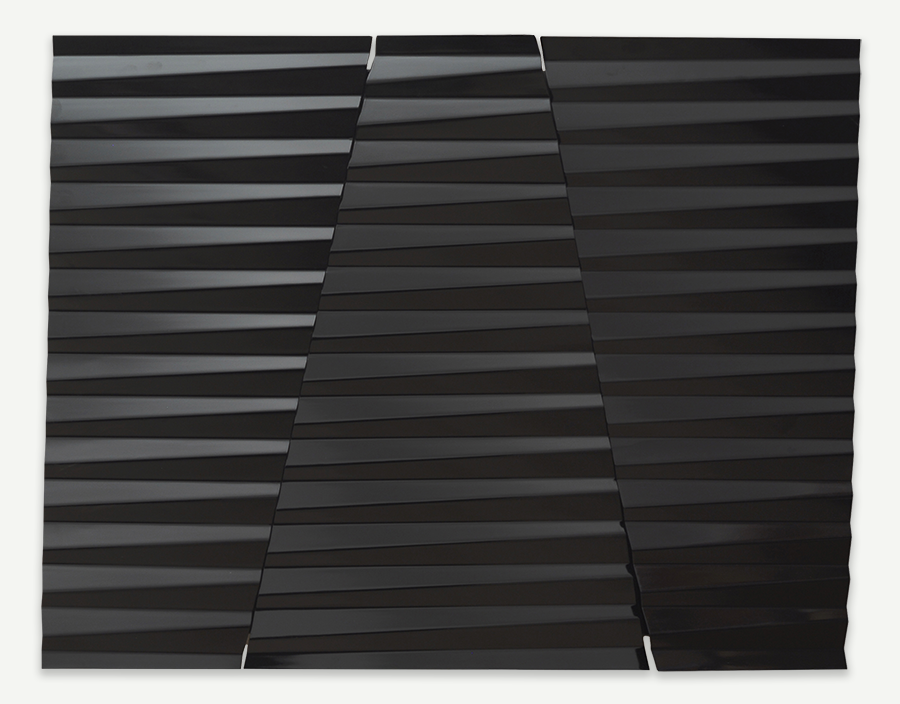
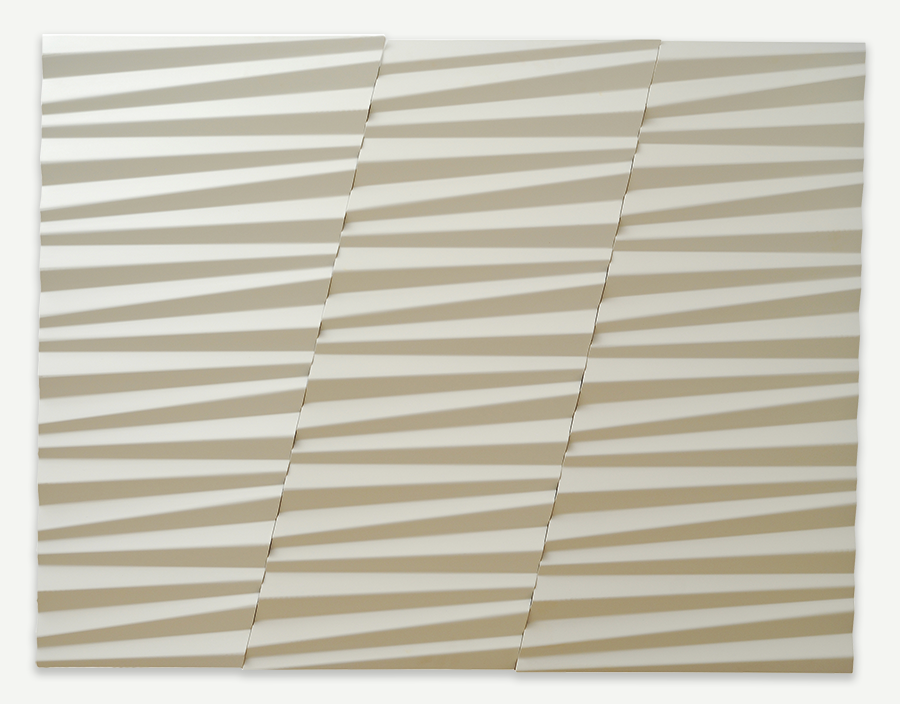
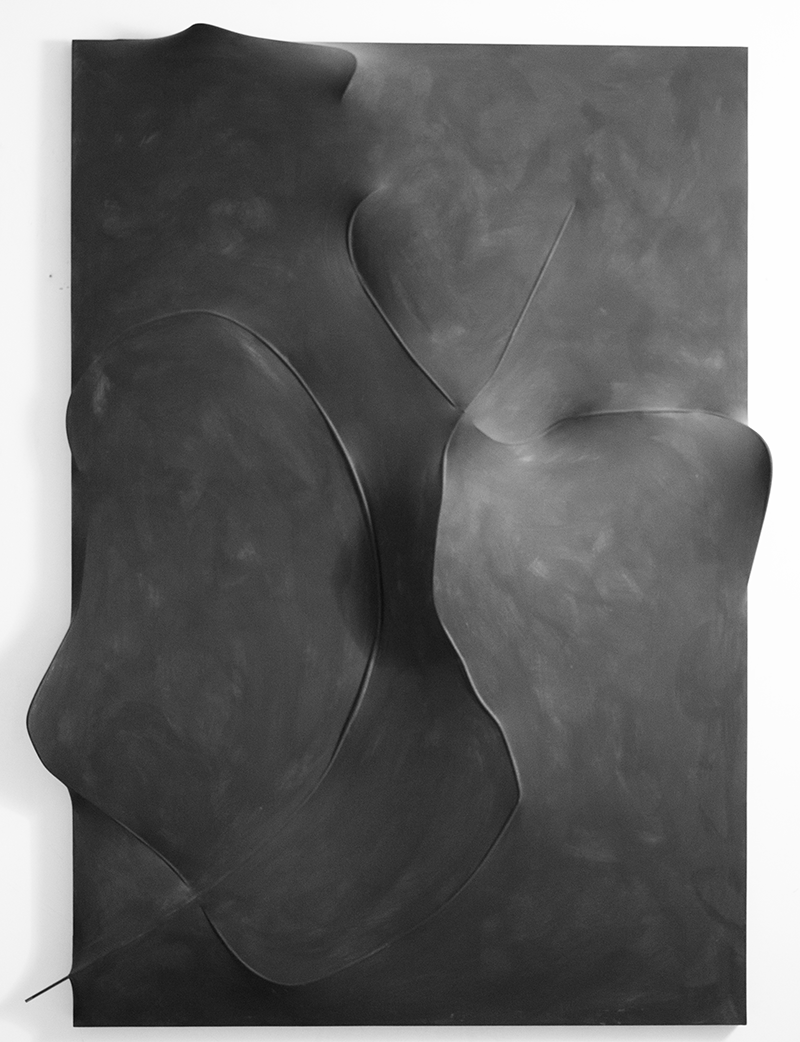
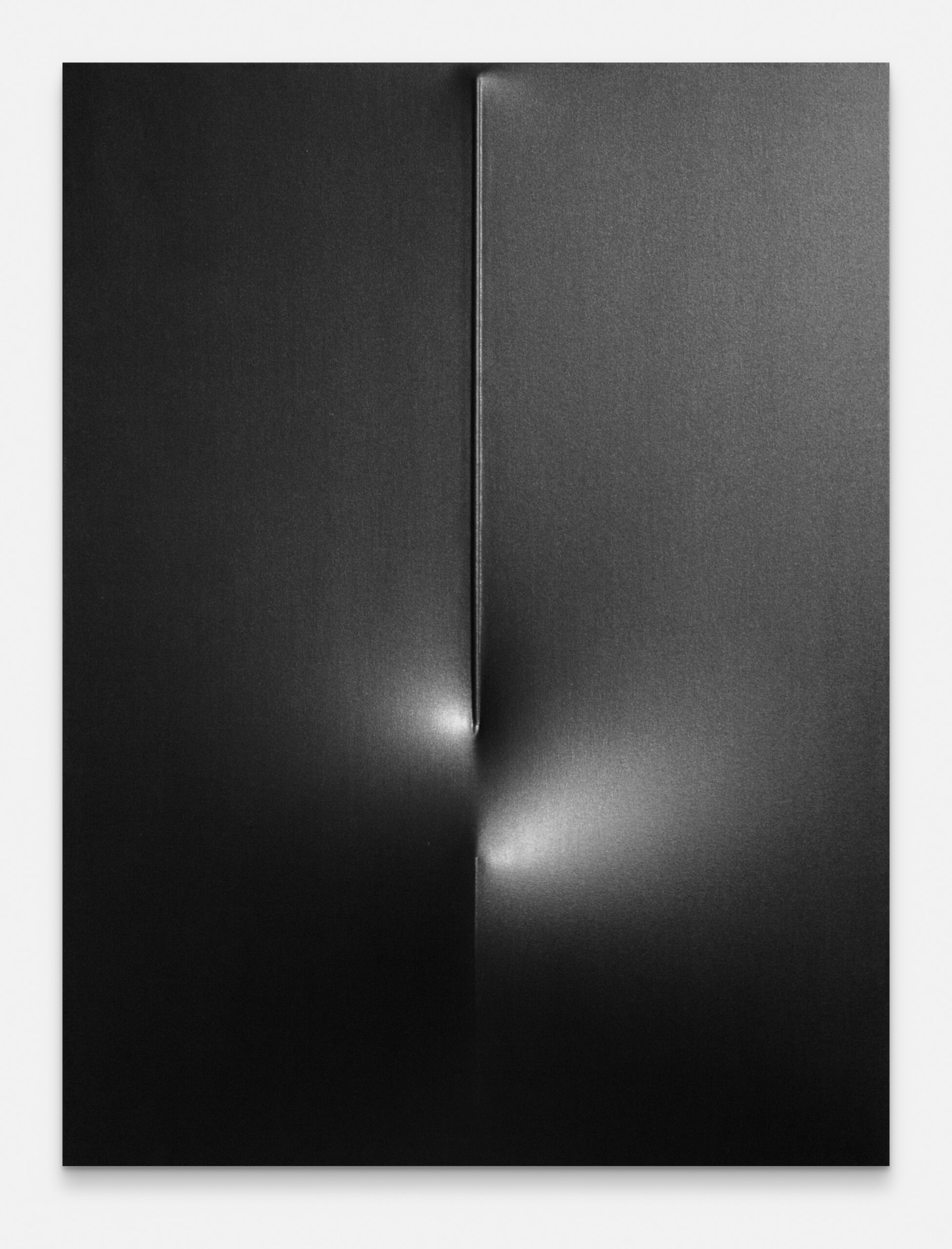
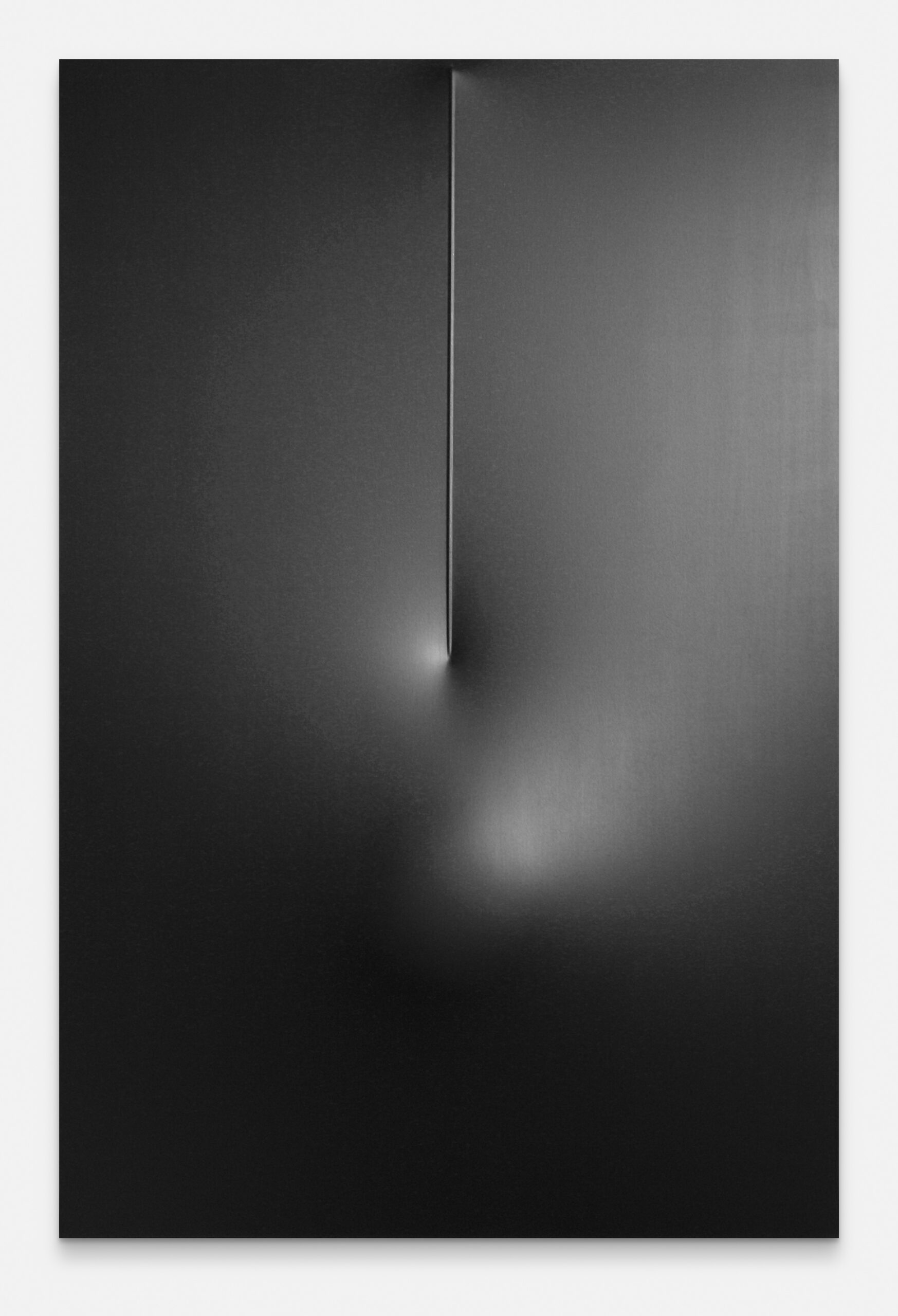
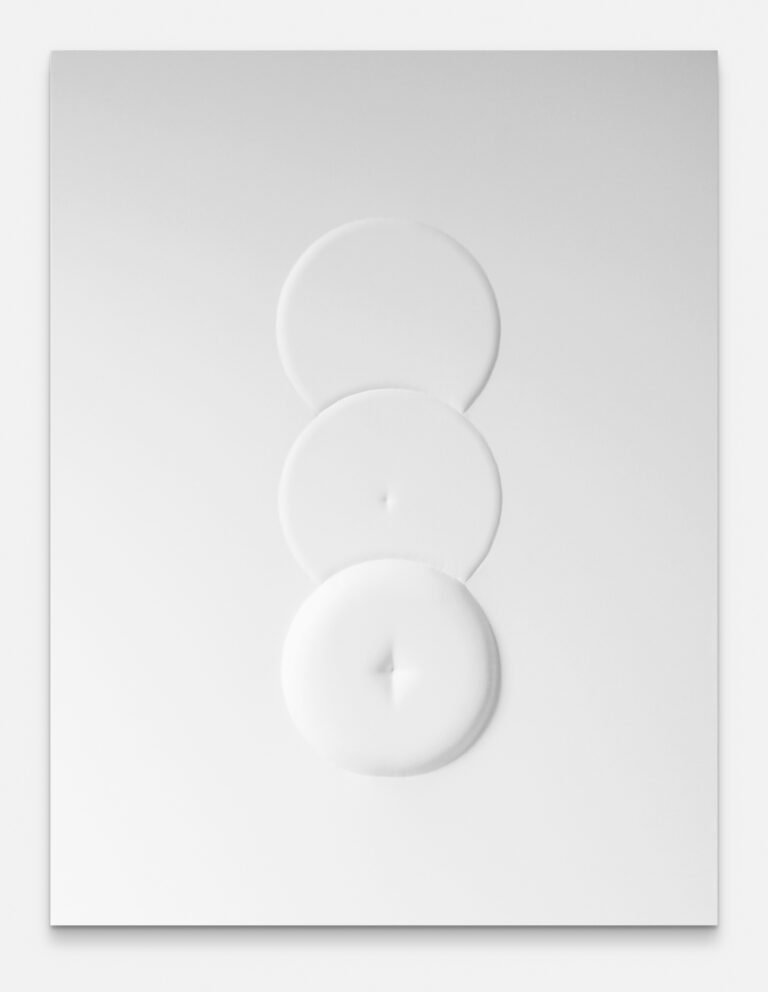
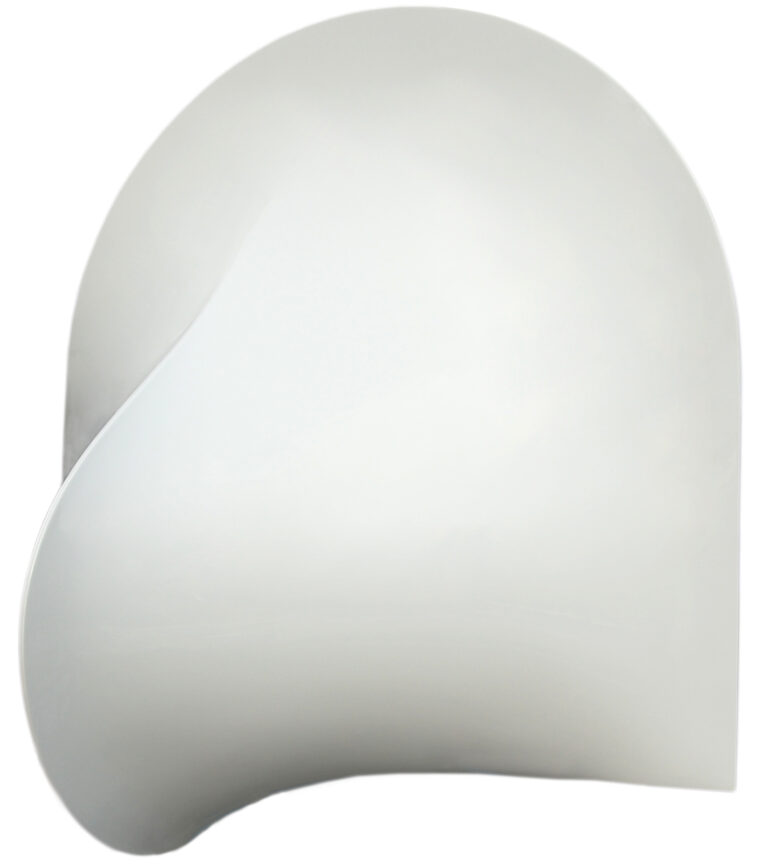
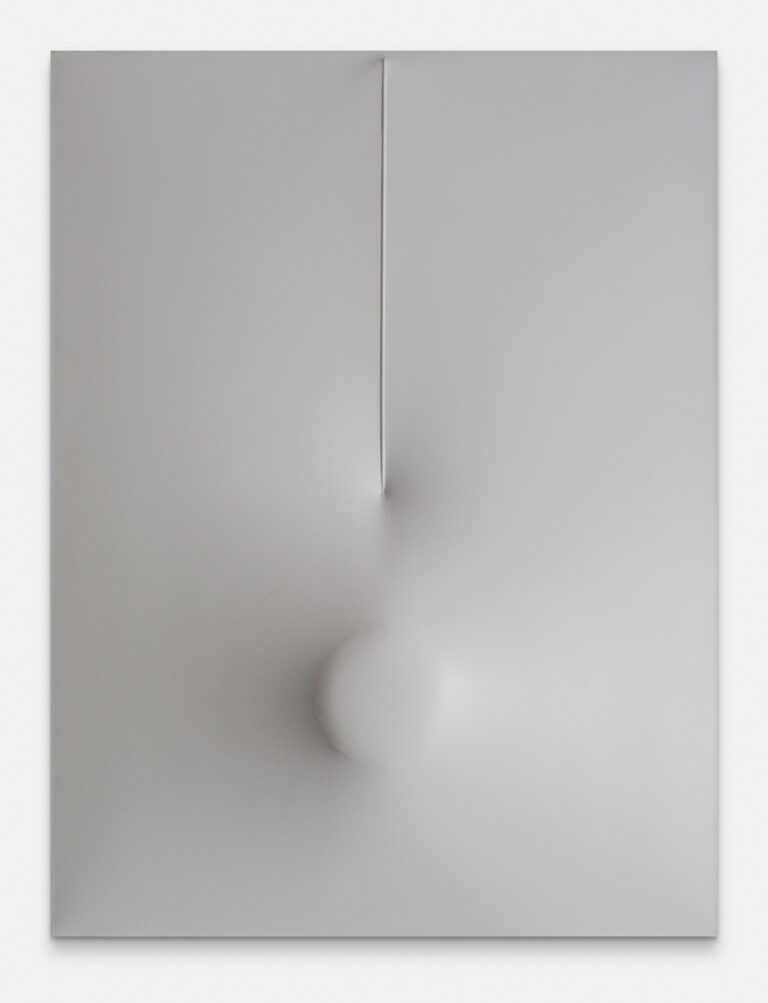
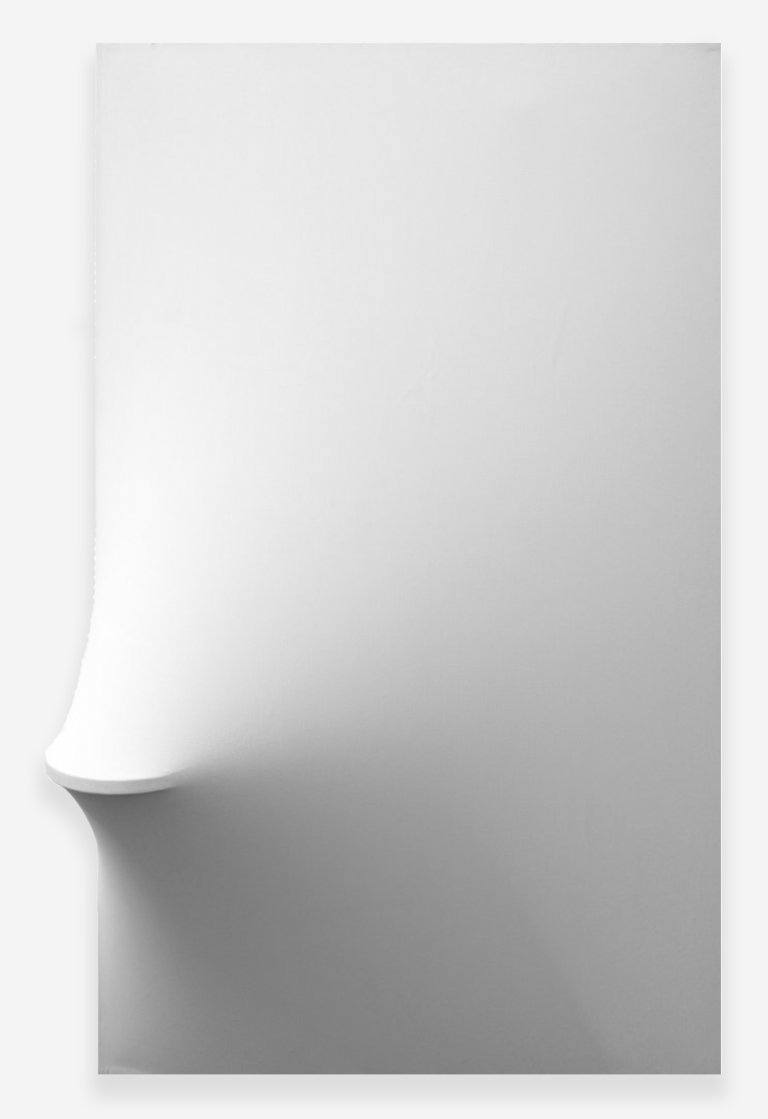
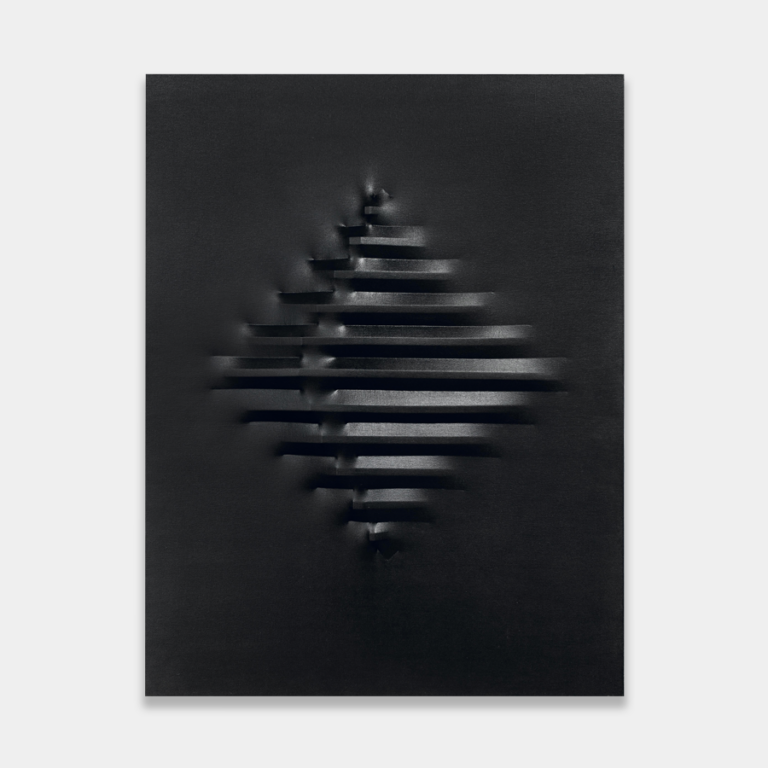
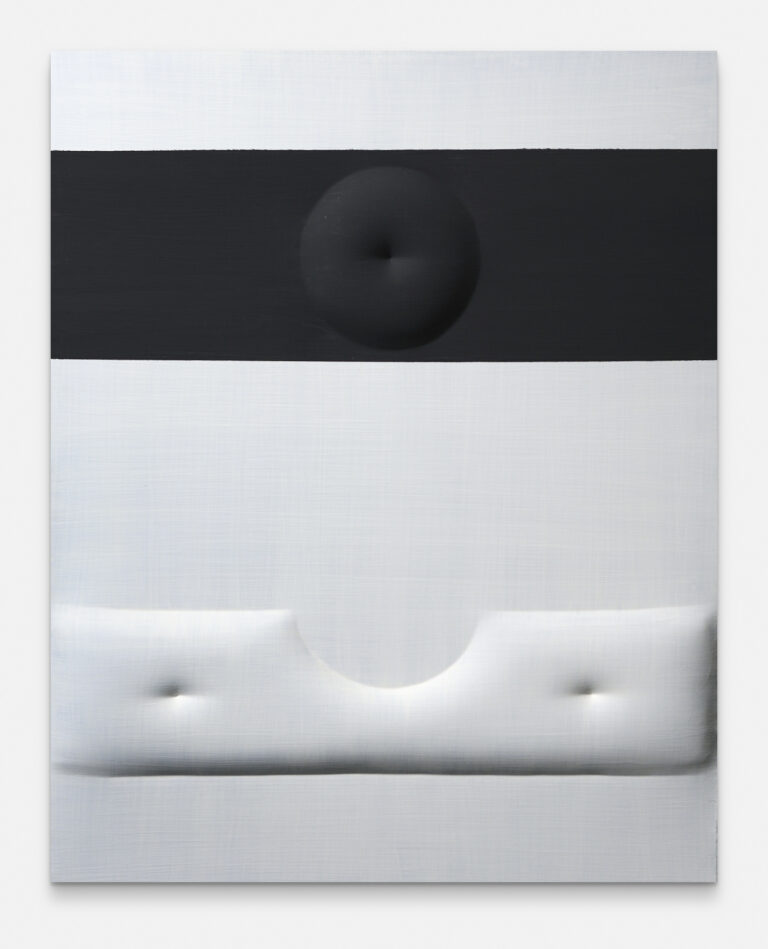
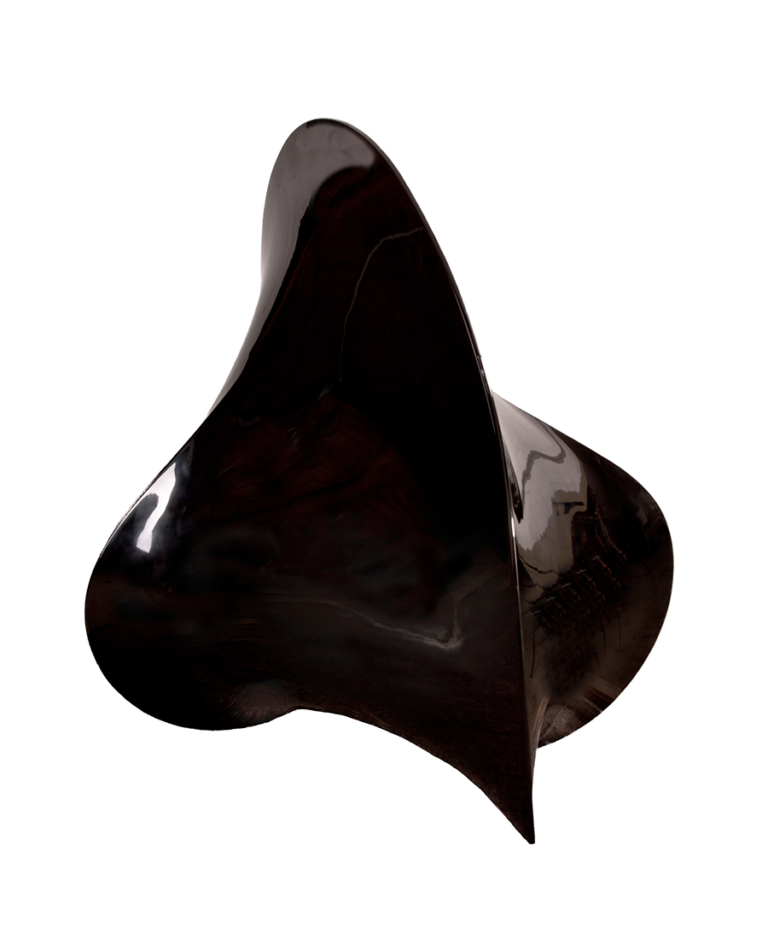
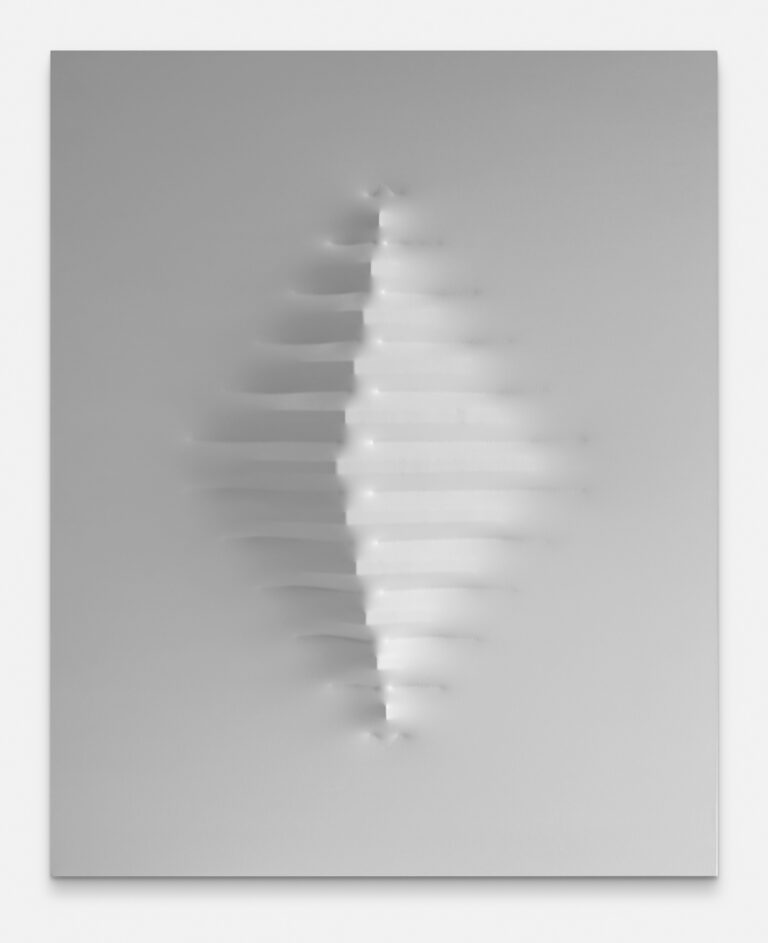
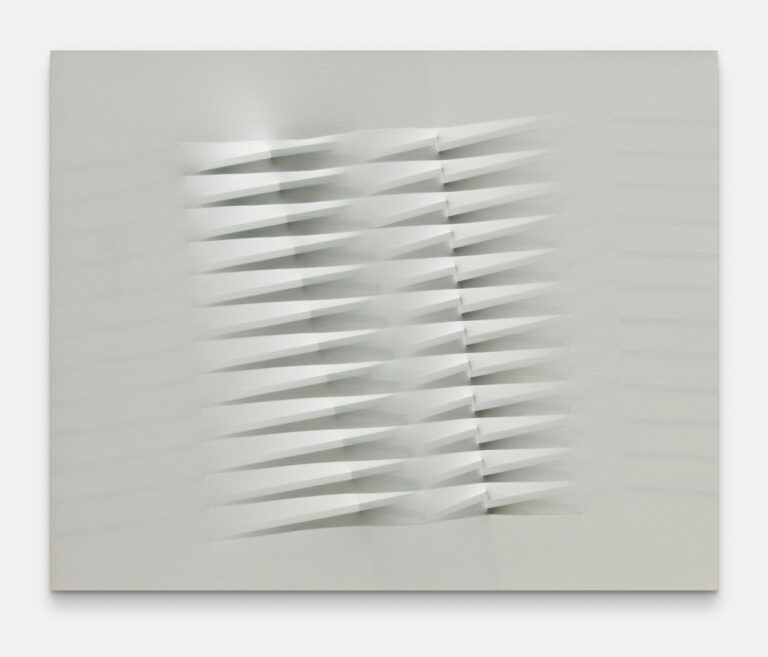
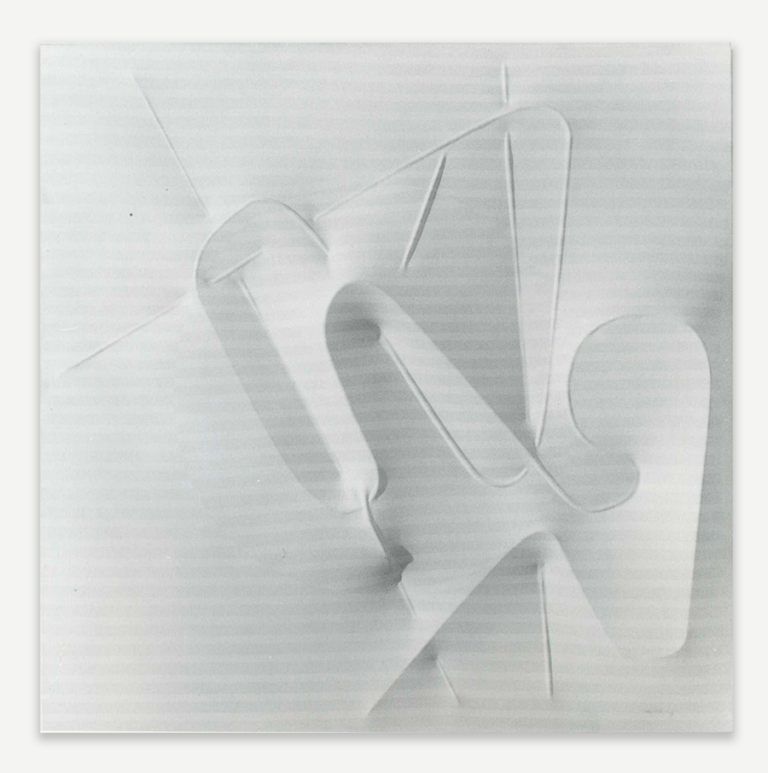
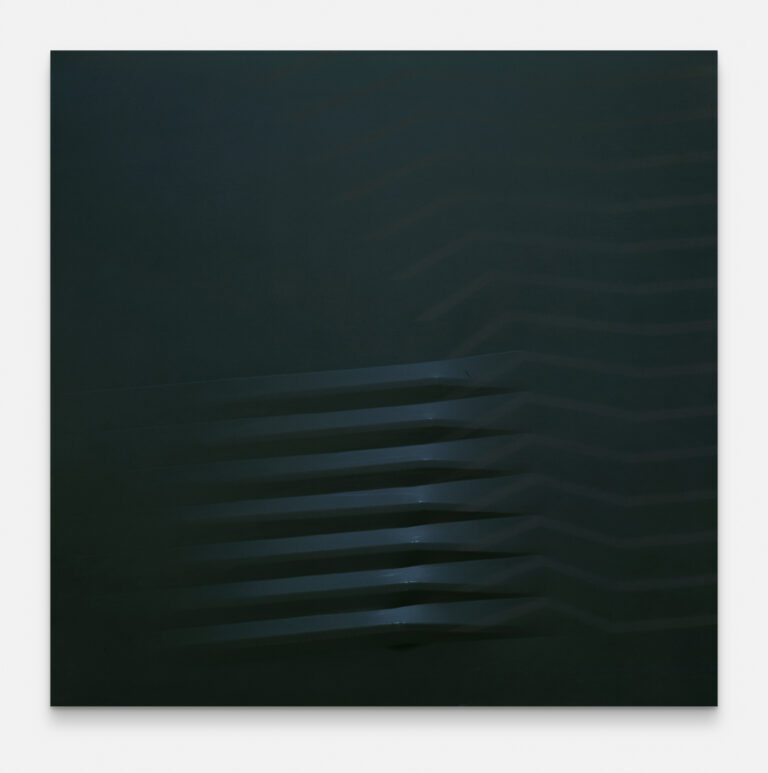
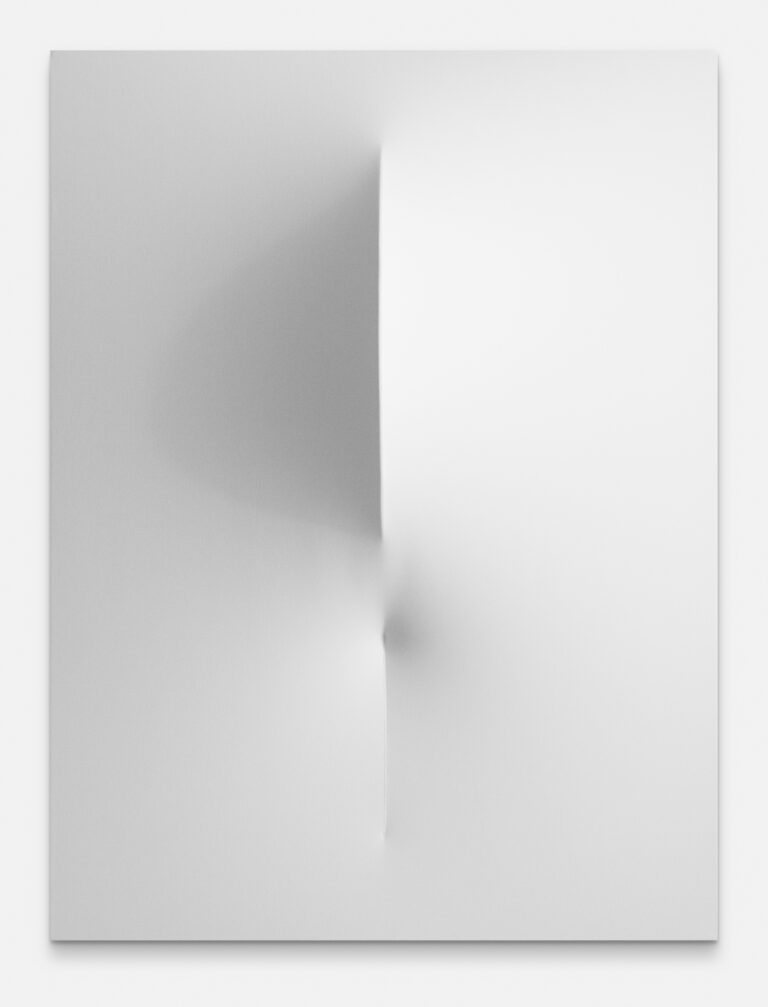
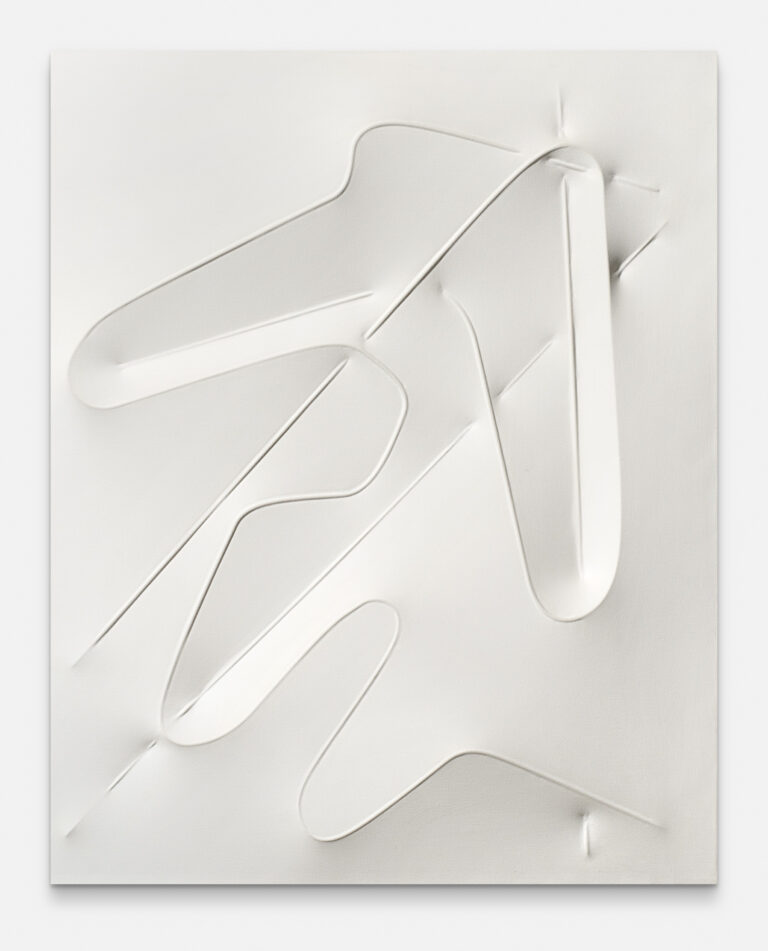
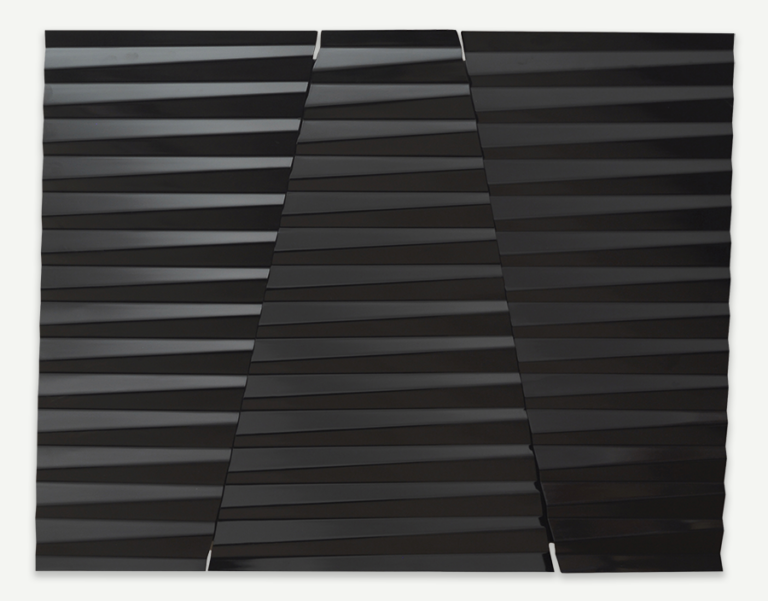
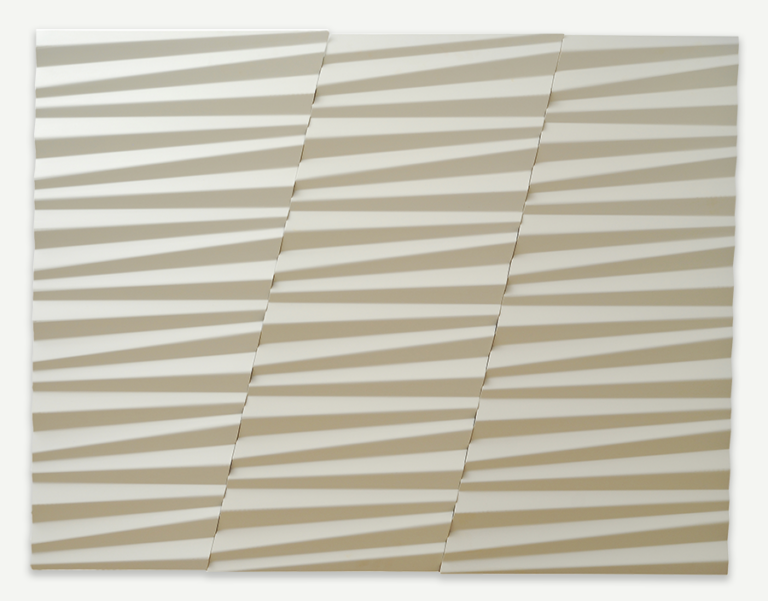
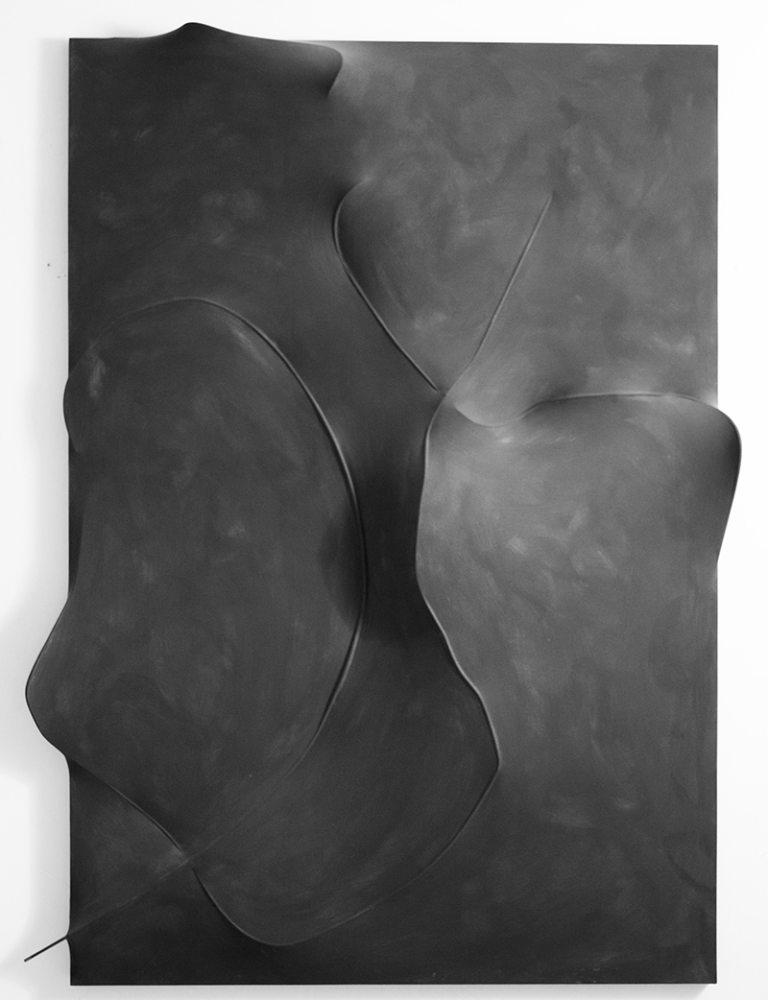
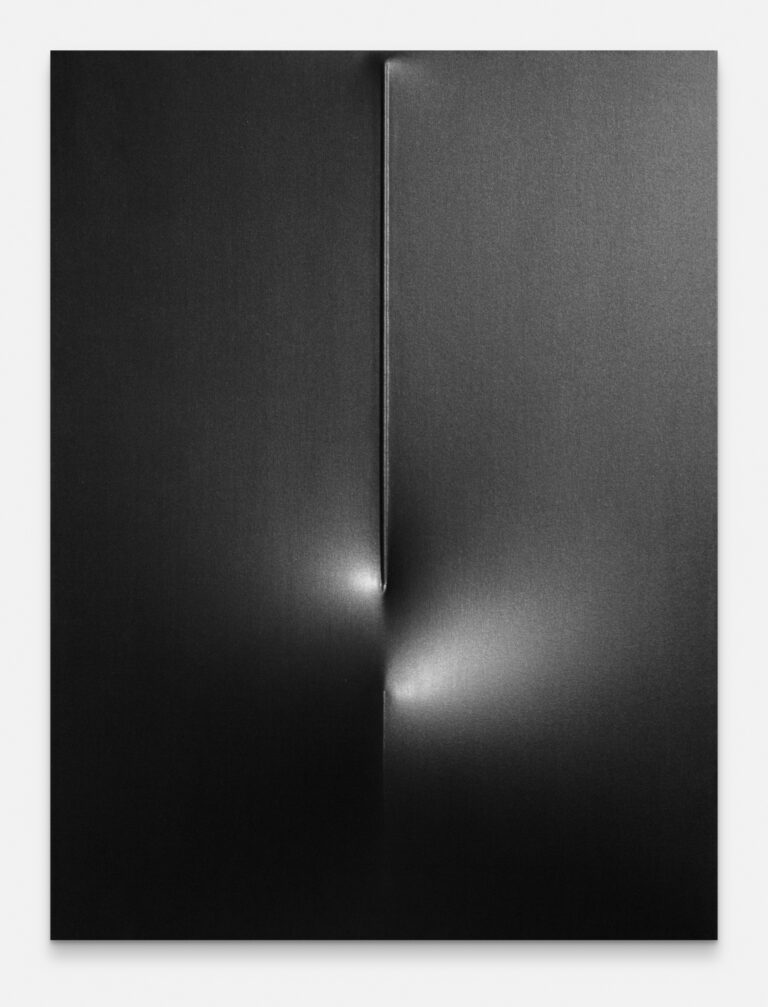
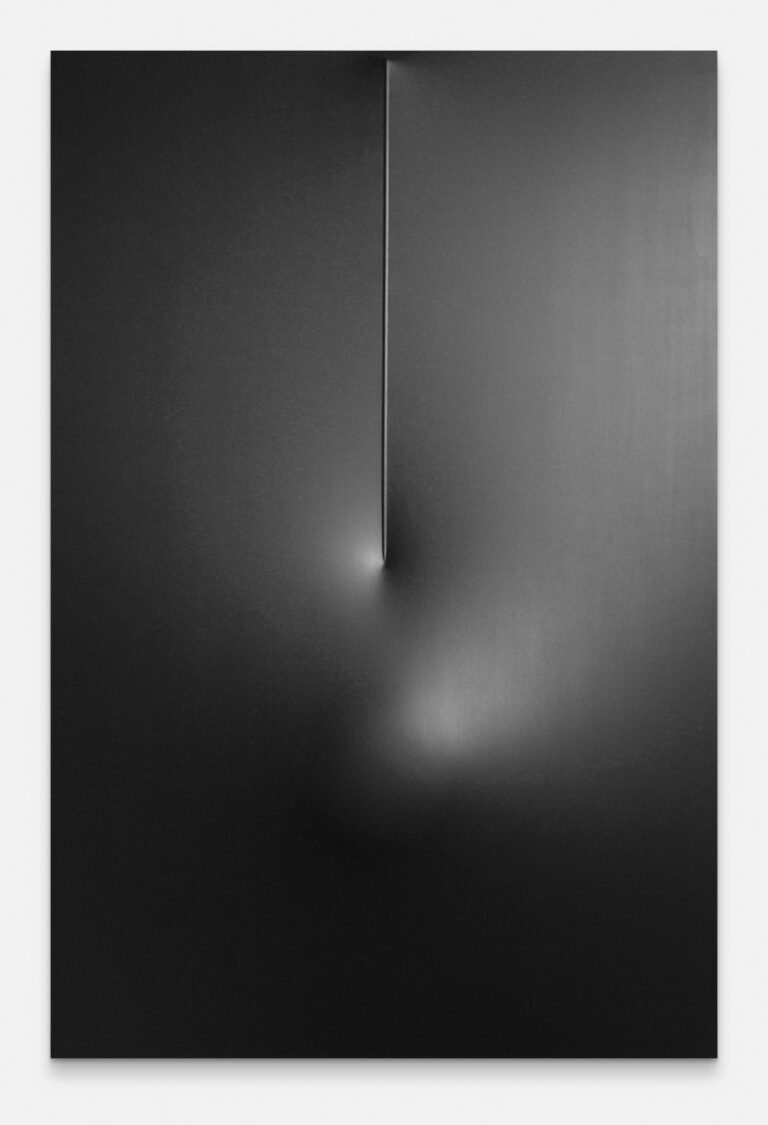
Agostino Bonalumi (1935–2013) was one of the defining figures of Italian postwar art. His ‘estroflessioni’, monochrome canvases shaped from behind by hidden structures, project from the wall into real space, defying the boundary between painting and sculpture.
Born in Vimercate, near Milan, Bonalumi trained in technical and mechanical drawing and taught himself to paint. He held his first solo exhibition at Galleria Totti, Milan, in 1957. Through Enrico Baj he met Piero Manzoni and Enrico Castellani, and from 1958 the three exhibited together almost as a group, at Galleria Pater in Milan, then in Rome and Lausanne. The partnership ended late in 1959, on the eve of the first issue of Manzoni and Castellani’s journal Azimuth, and from then on Bonalumi followed his own path. That same year, while visiting Lucio Fontana’s studio, he made his first shaped canvases. Turning away from the material gestures of Art Informel, he showed widely with the international ZERO network.
For more than fifty years Bonalumi pursued a single idea: that colour, being light, is itself the origin of form. The early ‘estroflessioni’ are built on circles, points and rounded rectangles, raised by handmade wooden frames and padding; by the late 1960s they swelled into waves and large enamelled fibreglass sculptures. He carried the idea into whole rooms with environments such as Blu abitabile (1967) and Grande Nero (1968), and designed sets and costumes for the ballets Partita (1970) and Rot (1972). The orthogonal grids of the 1970s and 1980s led to folded metal sheet, and from the 1990s to freer, almost gestural reliefs modelled with bent steel wire. In 2002 he received the Premio Presidente della Repubblica from the Accademia Nazionale di San Luca and created Ambiente bianco – Spazio trattenuto e spazio invaso for the Peggy Guggenheim Collection, Venice. His catalogue raisonné was published by Skira in 2015.
Bonalumi’s solo exhibitions include Galleria Arturo Schwarz, Milan (1965), the Museum am Ostwall, Dortmund (1968), a personal room at the 1970 Venice Biennale, and a 1974 exhibition at Palazzo dei Musei, Modena, introduced by Giulio Carlo Argan, followed by Palazzo Te, Mantua (1980), the Accademia Nazionale di San Luca, Rome (2002), the Institut Mathildenhöhe, Darmstadt (2003), the Moscow Museum of Modern Art (2011) and Robilant+Voena, London (2013). In 2018 Palazzo Reale, Milan, dedicated a major retrospective to him. He took part in the Venice Biennale in 1966 and 1986, the São Paulo Biennial in 1967 and the Rome Quadriennale in 1986, as well as in landmark exhibitions such as Lo spazio dell’immagine at Palazzo Trinci, Foligno (1967), Pittura Ambiente at Palazzo Reale, Milan (1979), and ZERO: Countdown to Tomorrow at the Guggenheim Museum, New York (2014). His work is held in public collections including the Centre Pompidou, Paris; the Peggy Guggenheim Collection, Venice; the Walker Art Center, Minneapolis; the Galleria Nazionale d’Arte Moderna, Rome; GAM, Turin; Mart, Rovereto; and Museo MADRE, Naples.
