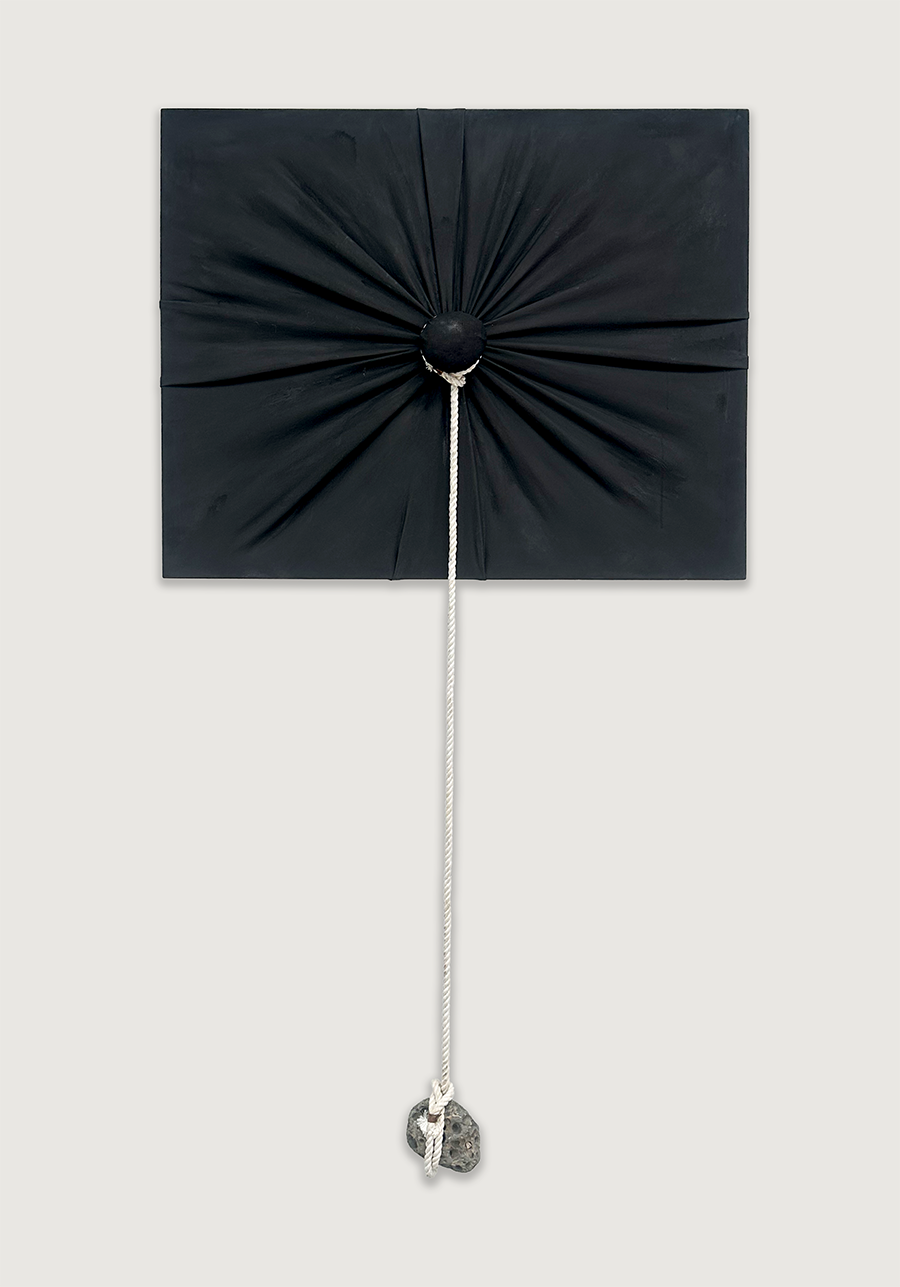
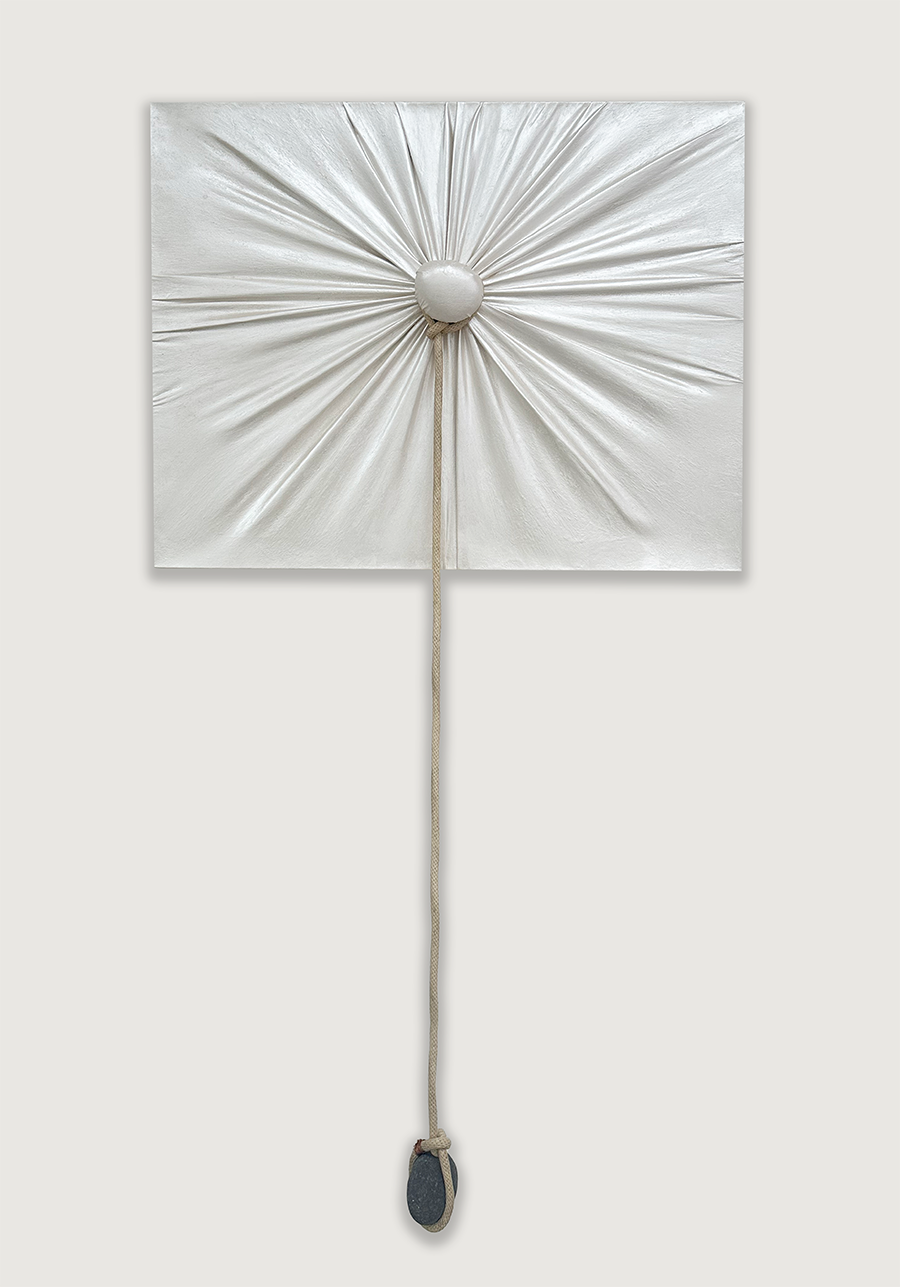
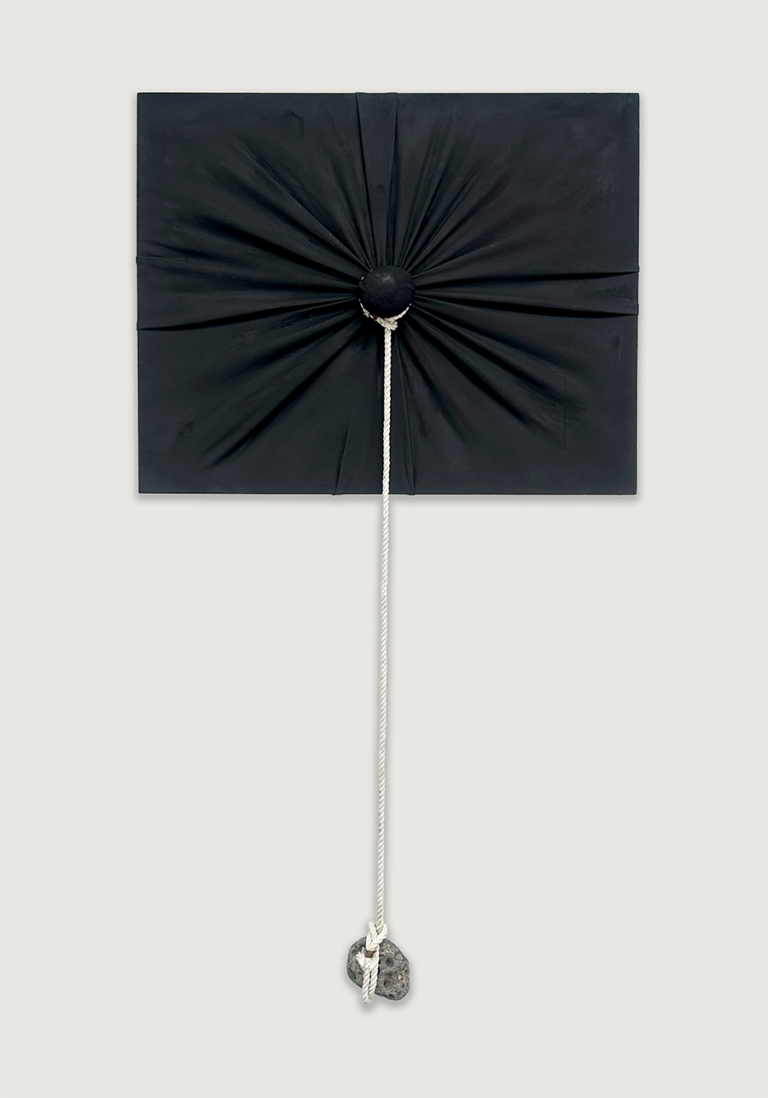
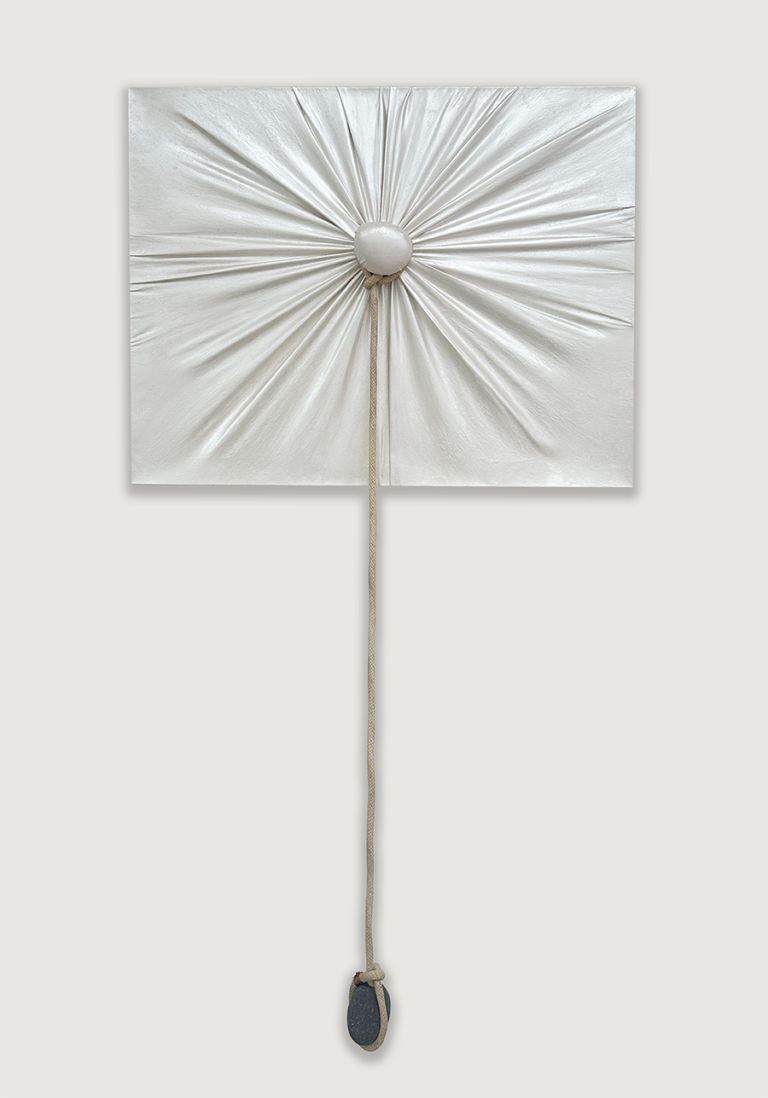
Nobuo Sekine first gained renown for his work in sculpture and installation art in late 1960s and 1970s Japan. After receiving a BFA in oil painting at Tama Art University, Tokyo, Japan in 1968, he began to engage with the concept of “phase” in topology, a branch of mathematics concerned with abstract space and connectedness—specifically the properties that are preserved under continuous deformations. Through this discipline, Sekine perceives form, matter, and space as infinitely malleable. His early Phase series made of bent plywood and bright, neon colors exemplifies these concepts and transforms the viewer’s visual perception. Sekine then made an indelible impact on the course of Japanese art history at the end of 1968, when he exhibited “Phase–Mother Earth” at the “1st Contemporary Sculpture Exhibition” at the Suma Rikyu Park in Kobe, Japan. This iconic work, which consisted of a cylindrical hole in the ground, seven feet wide and nine feet deep, accompanied by an adjacent cylindrical tower of earth molded into exactly the same dimensions, inspired artist-theorist Lee Ufan to develop new theories of phenomenology in a contemporary Japanese context. These theories provided a conceptual framework within which to understand the work of several artists working in the similarly ephemeral, site-specific modes, such as Susumu Koshimizu and Kishio Suga—who along with Sekine and Lee came to be referred to as Mono-ha (“school of things”).